

Nature Field Guide
Fulvous Whistling-Duck
- Spanish name
- Pijije canelo
- Scientific name
- Dendrocygna bicolor
What Do Pico & Tati Think?
Pico: “That duck has such a long neck!”
Tati: “Let’s compare its colors with the other ducks.”
Species overview
About the Fulvous Whistling-Duck
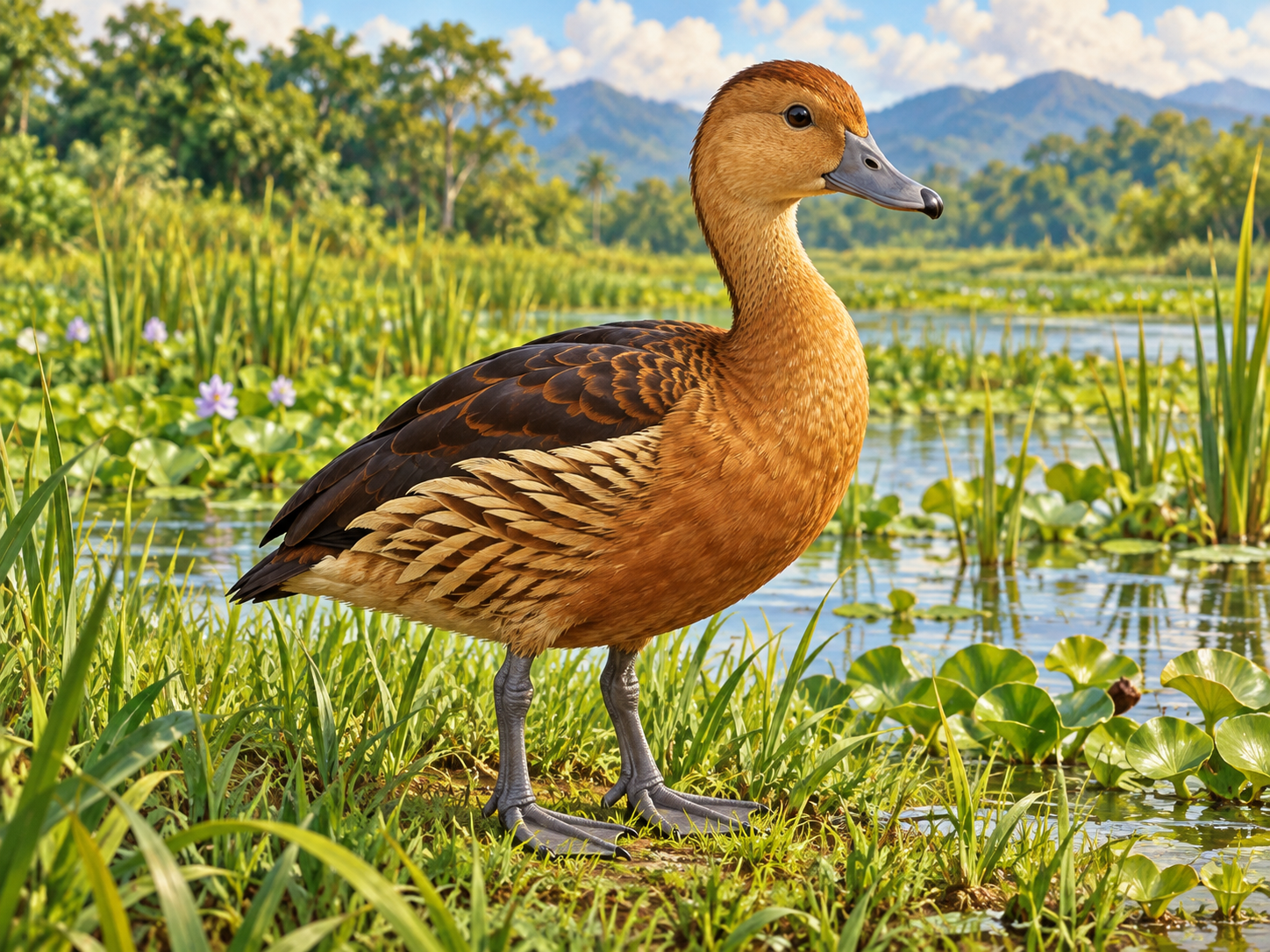
The Fulvous Whistling-Duck has rich brown and black plumage, a long neck and relatively long legs. Its dark bill helps separate it from the pink-billed Black-bellied Whistling-Duck. These proportions give it a different outline from many swimming ducks.
The species uses warm freshwater wetlands and can feed by straining muddy water for seeds and small invertebrates. Pairs share care of their young. Costa Rica’s Palo Verde wetlands provide documented habitat, but water levels and food conditions affect local use. Compare several identification clues rather than relying on brown color alone, especially when a flock contains more than one duck species.
Identification
Key Features of the Fulvous Whistling-Duck
Warm caramel-brown neck and underparts.
Dark bill, long neck and long legs.
Pale flank markings on a darker body.
Habitat & range
Documented in the Tempisque and Palo Verde wetland landscape. Freshwater marshes, shallow flooded areas and rice-growing wetlands are relevant habitats.
Local observations
SINAC names Fulvous Whistling-Duck at Palo Verde. No Costa Rican migration or nesting month range is inferred from North American calendars.
When to observe
Plan a quiet observation with a local guide. Weather, food availability and the chosen habitat affect what you may see; a location record does not guarantee a sighting.
Conservation & care
Stay on authorized trails or viewing routes. Give birds space, keep voices low and leave nests undisturbed. Observe without bait, feeding or recorded calls.
Observation activity
Use a field guide to compare the bills and head colors of two whistling-duck species. Record only features visible from your viewing point.