

Nature Field Guide
Acorn Woodpecker
- Spanish name
- Carpintero careto
- Scientific name
- Melanerpes formicivorus
What Do Pico & Tati Think?
Pico: “That face has bold black, white and red shapes!”
Tati: “Let’s look for clues on the tree without touching them.”
Species overview
About the Acorn Woodpecker
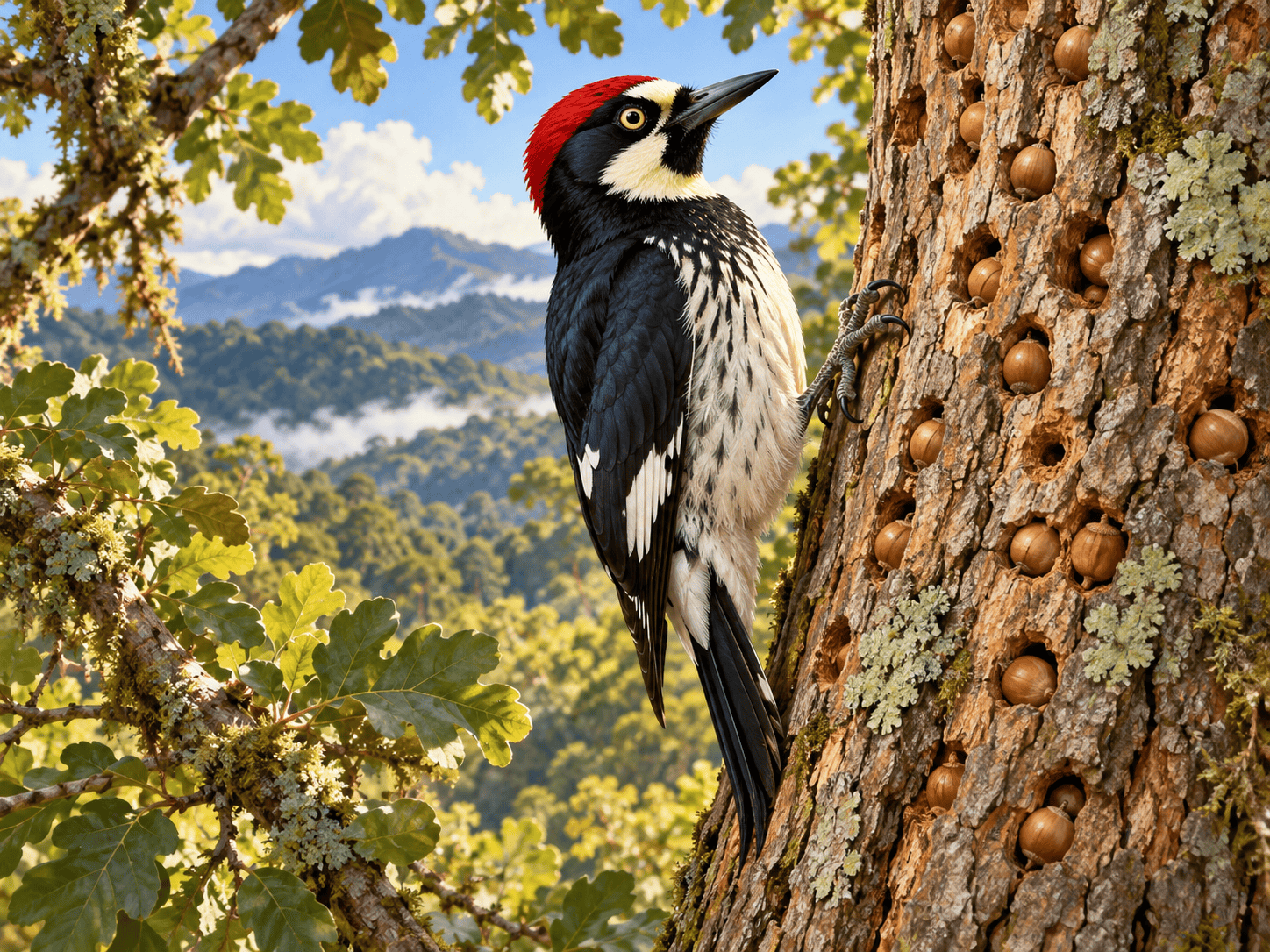
The Acorn Woodpecker has a red cap, a pale face and bold black-and-white plumage. In flight, white patches in the wings and rump offer useful clues. Its straight bill and stiff tail help it work on trunks and branches.
This species is famous for social groups that store acorns in drilled holes, although food-storage behavior varies across its range. Birds also catch flying insects. A tree can serve as a feeding site, storage place or nest resource, so examine its use carefully instead of assuming every hole has the same purpose. Costa Rica’s mountain oak forests provide a fitting setting to explore these relationships.
Identification
Key Features of the Acorn Woodpecker
Red cap, pale face and black patch around the bill.
White wing patches and white rump in flight.
Straight bill and stiff supporting tail.
Habitat & range
Mainly middle and high elevations in the Central and Talamanca ranges, especially oak landscapes. South Pacific refers to upland slopes, not the coastal plain.
Local observations
SINAC lists Acorn Woodpecker at La Amistad. The park-level list does not establish a bird at every Biolley trail or in the town.
When to observe
Plan a quiet observation with a local guide. Weather, food availability and the chosen habitat affect what you may see; a location record does not guarantee a sighting.
Conservation & care
Stay on authorized trails or viewing routes. Give birds space, keep voices low and leave nests undisturbed. Observe without bait, feeding or recorded calls.
Observation activity
Draw a tree hole from the trail. Note whether you actually see a bird using it; do not label it a nest or acorn store without evidence.