

Explore Limón city through its public spaces, coastal setting and layered cultural history. Notice the architecture, listen to local stories and discover how the port, railway and communities helped shape this Caribbean city.
Explore Limón
Limón is a canton in Costa Rica’s Limón province. The city of Limón brings Costa Rica’s Caribbean identity into view through its port, community life and Afro-Caribbean cultural heritage. Explore at a thoughtful pace, respect local guidance and discover how small choices can care for both community and nature.
Playa Bonita near Limón
Playa Bonita is a separate coastal stop outside downtown. Observe the shoreline and surf from a suitable entrance. Conditions can include strong waves, so choose activities using current local warnings rather than the beach’s inviting name.
Playa Piuta
Piuta offers another coastal setting near the city. Plan the route and enjoy a shoreline observation or a local meal where available. Water conditions still need assessment; a general destination description is not a swimming guarantee.
Moín’s Coastal Setting
Moín combines a coastal landscape with significant port activity. Explore only public or authorized areas, keeping clear of working facilities. A boat departure or beach outing needs an exact meeting point and current access information.
Afro-Costa Rican Stories in Limón
Food, language, music and community histories are part of Limón’s living culture. Choose opportunities led by local hosts and let people explain their own experiences. Ask permission before recording, photographing or entering a cultural space.
Historic Post and Telegraph Building
The former postal and telegraph building is part of Limón’s architectural heritage. Admire its exterior from public space and ask locally what visitor access is currently offered. A historic building does not automatically mean an open museum.
Sacred Heart Cathedral of Limón
Limón’s cathedral is an active place of worship as well as a city landmark. Visit respectfully when access is permitted, notice its modern form and follow arrangements around services and photography.
Big Boy Baseball Stadium
Baseball is part of Limón’s cultural story, and Big Boy Stadium is a named landmark on the city heritage route. Check any event or visitor arrangements locally; the presence of a stadium does not imply unrestricted access.
Tomás Guardia School Heritage
The school is included in Limón’s historic city walk. Observe the building from a public route and talk about the role of education in a growing port city. School grounds are not an open tourist attraction.
Uvita Island from Shore
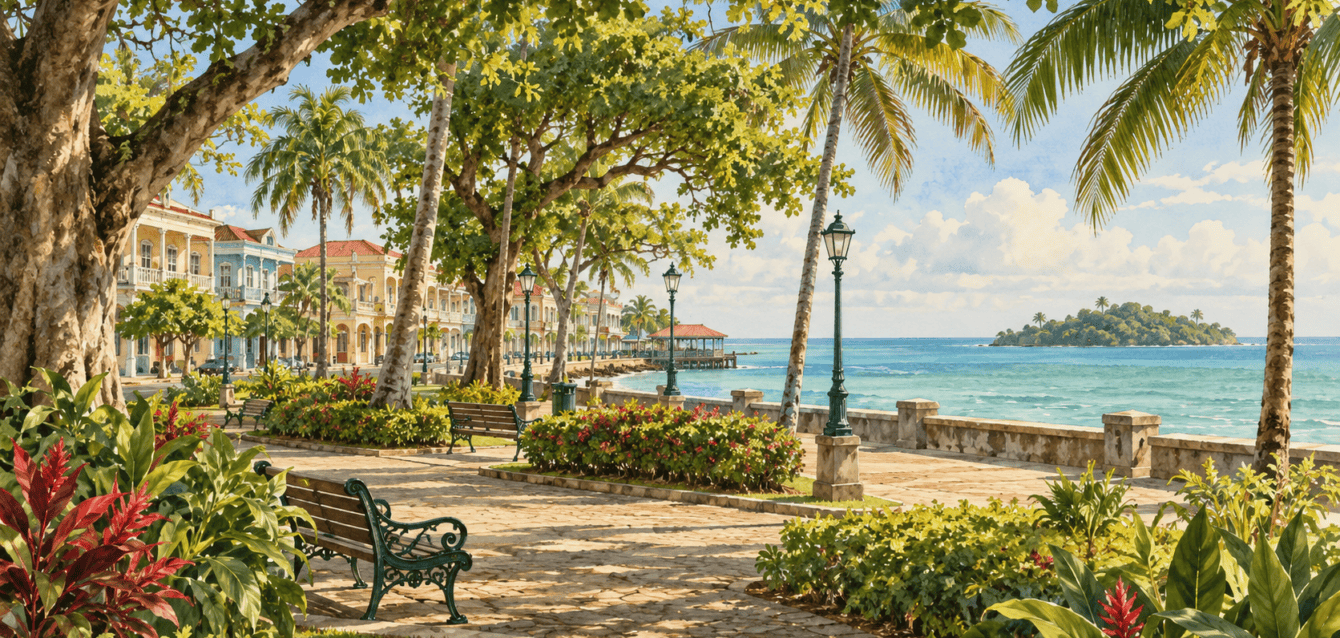
Uvita Island forms part of the coastal view from Limón. Compare its outline from a secure public viewpoint. If considering a boat outing or landing, confirm current permission and arrangements instead of assuming independent access.
Parque Vargas
Parque Vargas is one of Limón’s historic public landmarks. Pause along an open route to notice planted trees and the coastal setting. Respect maintenance closures and watch wildlife from a distance without feeding it.
Limón’s Coastal Breakwater
The breakwater is part of the city’s urban story and relationship with the sea. View it from secure public space and compare the shoreline with its historic role. Avoid exposed edges when waves or weather make them unsuitable.