

Nature Field Guide
Helmeted Iguana
- Spanish name
- Iguana de casco / Lagartija de casco
- Scientific name
- Corytophanes cristatus
What Do Pico & Tati Think?
Pico: “What can we learn from this reptile’s shape?”
Tati: “Let’s notice its markings and habitat while leaving it plenty of space.”
Species overview
About the Helmeted Iguana
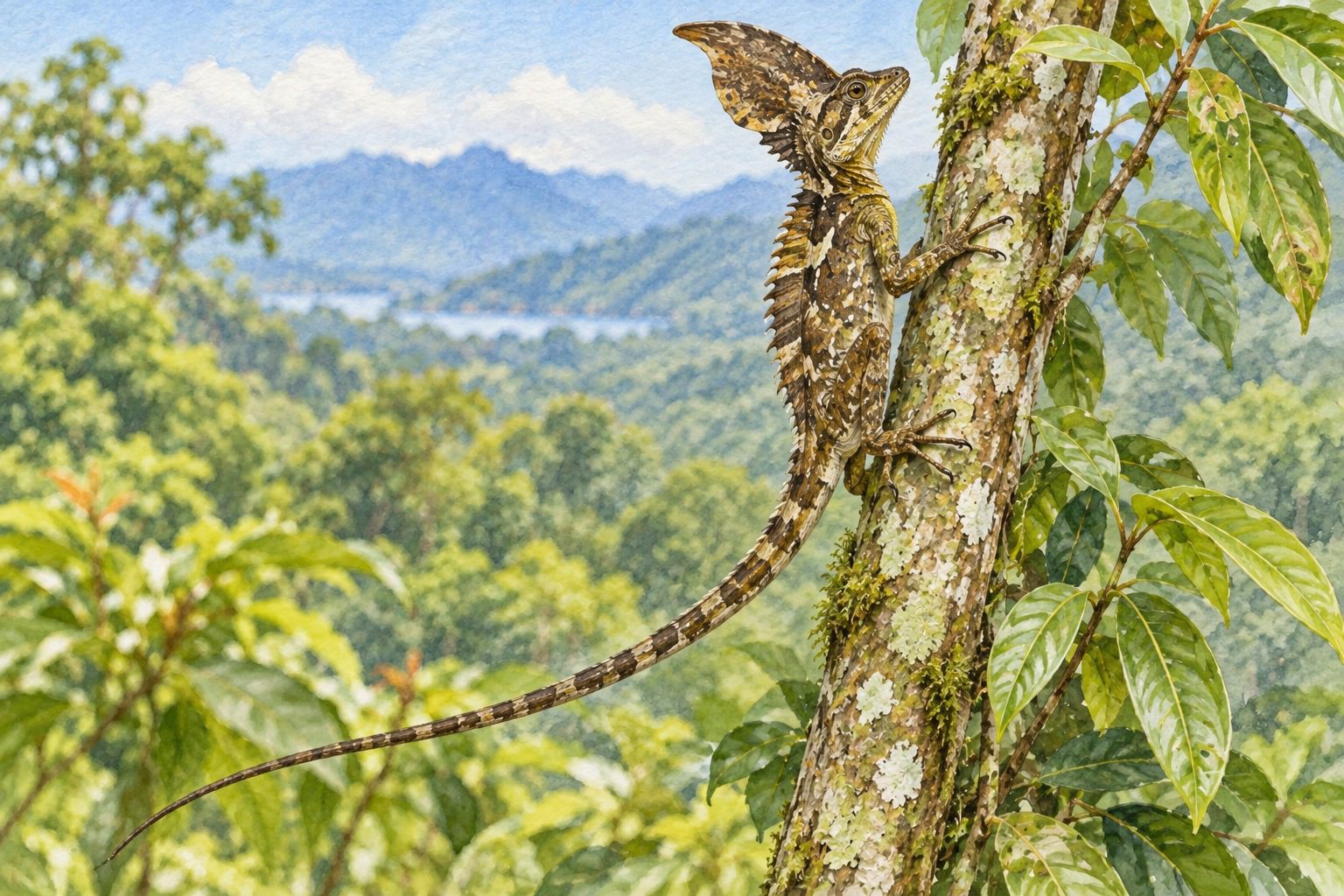
The helmeted iguana has a conspicuous raised casque behind its head, a long tail and a strongly camouflaged body. Brown, olive and pale patches merge with tree bark and shadow. Its stillness can make it harder to detect than its unusual shape suggests.
It is a forest lizard, not a chameleon. Observe its grip and upright posture without making it move. An animal remaining still has not given permission to be handled. Let the forest’s quiet expert keep its chosen place on the trunk.
Identification
Key Features of the Helmeted Iguana
Tall helmetlike casque
Long tail and grasping limbs
Mottled bark-colored camouflage
Habitat & range
Humid Caribbean and Pacific forests and foothills, including northern wet forests and the southwest.
Local observations
Native reptile recorded in Costa Rica. Presence depends on suitable habitat and locality.
When to observe
Observe on permitted paths with an adult or qualified guide. Activity varies by species, place and weather; never disturb a hiding or resting animal.
Conservation & care
Observe from permitted paths with an adult. Do not touch, chase, catch or feed reptiles. Leave bark, stones, logs and leaf litter in place. Keep pets away and give animals an open escape route.
Threats & pressures
Protect natural shelters and connected habitat. Avoid collection, unnecessary clearing and deliberate killing. Leave wildlife in its habitat and support responsible observation.
Observation activity
Draw its silhouette first, then add bark patterns around it. How much harder is the outline to find?
Explore by location
Caribbean · Central Pacific · Northern Plains · South Pacific · Alajuela · Heredia · Limón · Puntarenas · San José