

Nature Field Guide
Carpenter’s Anole
- Spanish name
- Anolis de Carpenter
- Scientific name
- Anolis carpenteri
What Do Pico & Tati Think?
Pico: “What can we learn from this reptile’s shape?”
Tati: “Let’s notice its markings and habitat while leaving it plenty of space.”
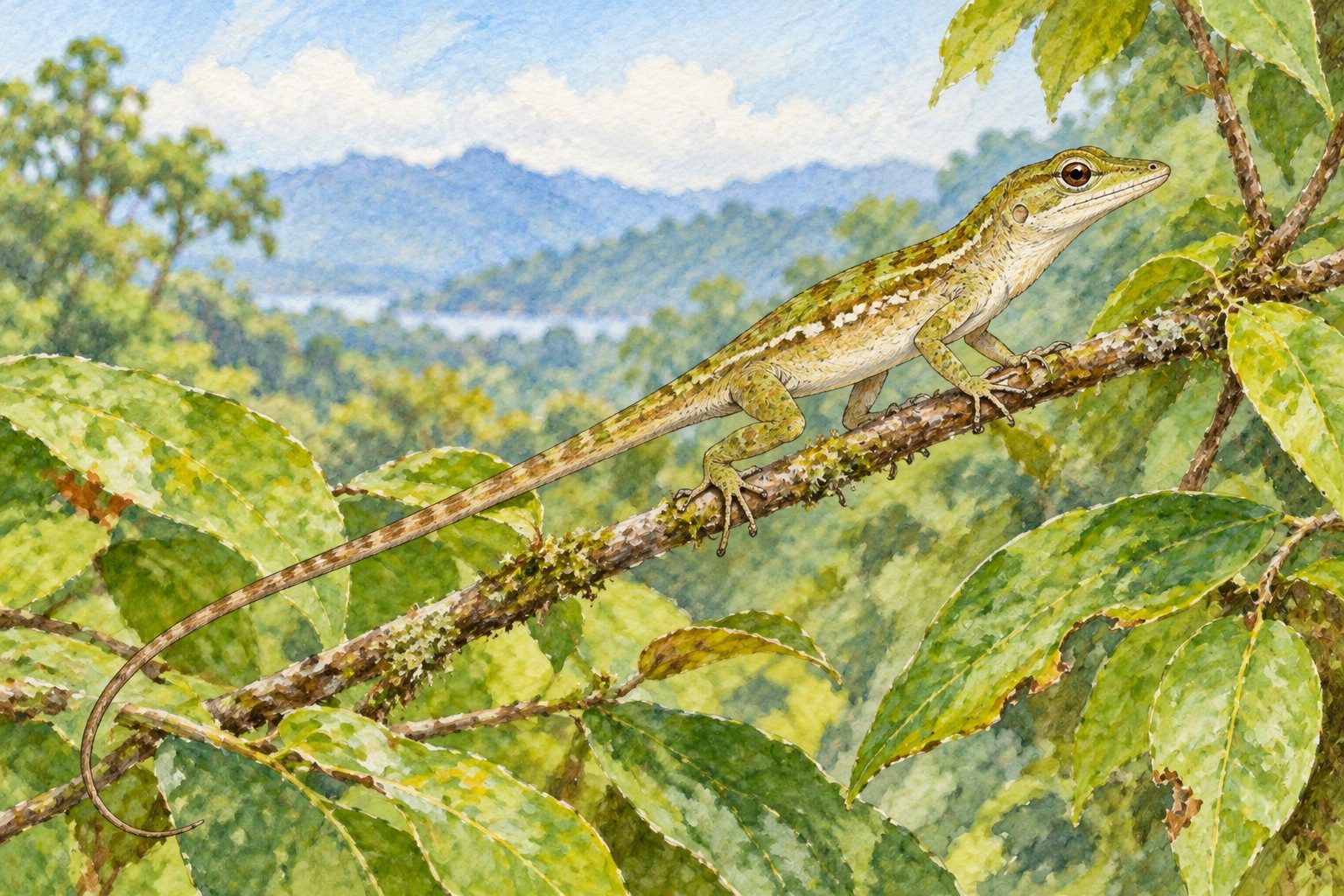
Species overview
About the Carpenter’s Anole
Carpenter’s anole has a delicate body, relatively short limbs and a slender tail. Greenish or gray-green tones help it blend with shaded vegetation. It can be much less conspicuous than a large bright green anole higher in a tree.
It is recorded in Costa Rica’s Caribbean-slope forests, including the Reventazón area. Small anoles can use similar perches while remaining different species. A patient observer can record the perch, shade and height without reaching for the animal. Keep those habitat notes with any distant photograph.
Identification
Key Features of the Carpenter’s Anole
Small delicate greenish body
Relatively short limbs
Slender tail and narrow perch use
Habitat & range
Caribbean-slope humid forest and foothills, including the Reventazón valley and northern Caribbean lowlands.
Local observations
Native reptile recorded in Costa Rica. Presence depends on suitable habitat and locality.
When to observe
Observe on permitted paths with an adult or qualified guide. Activity varies by species, place and weather; never disturb a hiding or resting animal.
Conservation & care
Observe from permitted paths with an adult. Do not touch, chase, catch or feed reptiles. Leave bark, stones, logs and leaf litter in place. Keep pets away and give animals an open escape route.
Threats & pressures
Protect natural shelters and connected habitat. Avoid collection, unnecessary clearing and deliberate killing. Leave wildlife in its habitat and support responsible observation.
Observation activity
Sketch a perch and label leaf cover, shade and branch thickness. Leave the animal where it is.
Explore by location
Caribbean · Northern Plains · Alajuela · Cartago · Heredia · Limón