

Nature Field Guide
White Anole
- Spanish name
- Anolis de vientre liso
- Scientific name
- Anolis laeviventris
What Do Pico & Tati Think?
Pico: “What can we learn from this reptile’s shape?”
Tati: “Let’s notice its markings and habitat while leaving it plenty of space.”
Species overview
About the White Anole
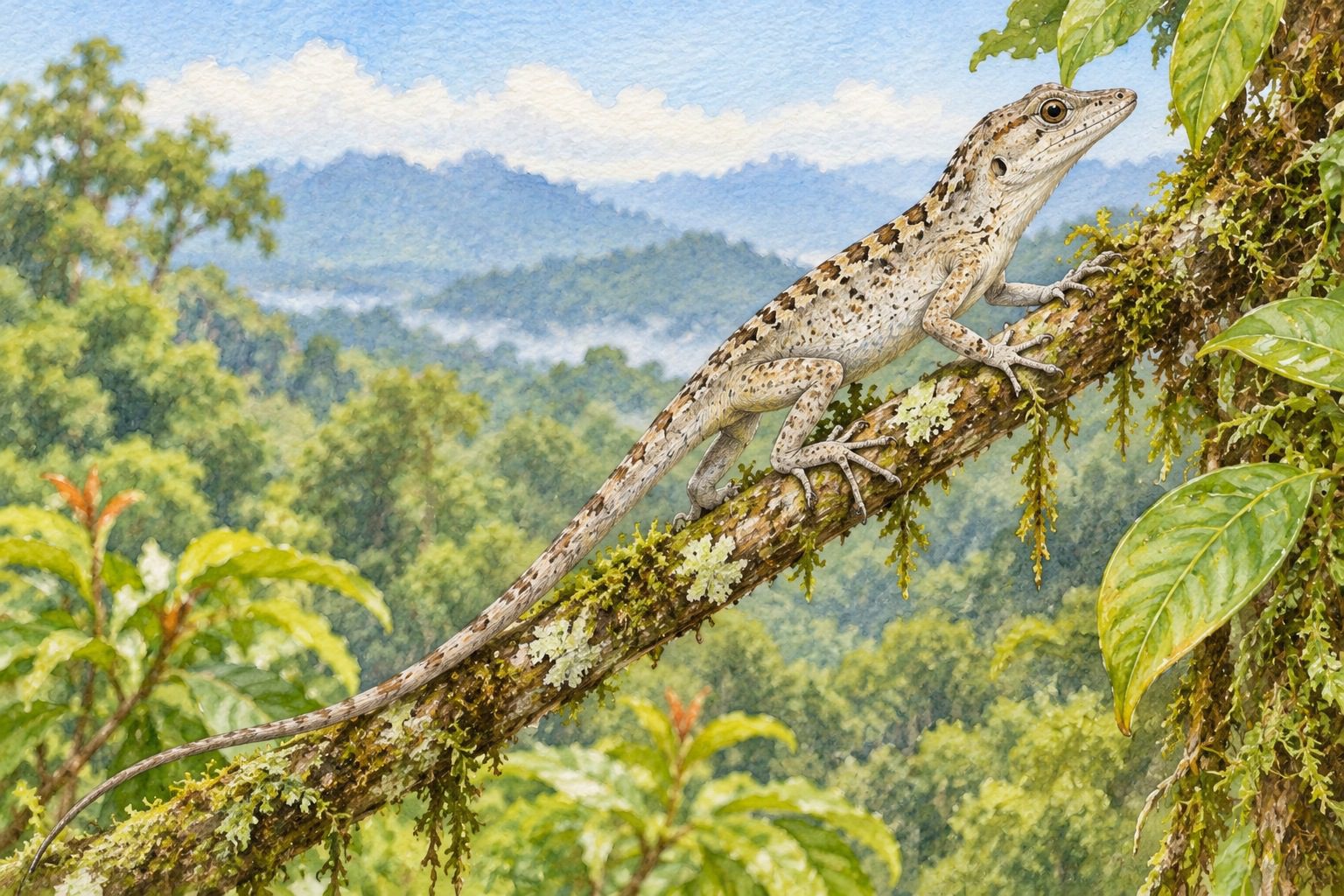
The white anole can look light gray or brownish, with mottling that breaks up its outline. Small body size and a fine tail can make it difficult to notice among twigs. The common name does not mean that every individual is pure white.
Costa Rican populations were often called Anolis intermedius in older references. Checking names helps us connect old observations with current research without counting the same species twice. Watch from a distance and note the locality before comparing a sighting with a trusted reference.
Identification
Key Features of the White Anole
Small gray-to-brown anole
Mottled twig-colored camouflage
Fine tapering tail
Habitat & range
Upland forest and edges in Costa Rica, including San Luis de Monteverde and central mountain areas.
Local observations
Native reptile recorded in Costa Rica. Presence depends on suitable habitat and locality.
When to observe
Observe on permitted paths with an adult or qualified guide. Activity varies by species, place and weather; never disturb a hiding or resting animal.
Conservation & care
Observe from permitted paths with an adult. Do not touch, chase, catch or feed reptiles. Leave bark, stones, logs and leaf litter in place. Keep pets away and give animals an open escape route.
Threats & pressures
Protect natural shelters and connected habitat. Avoid collection, unnecessary clearing and deliberate killing. Leave wildlife in its habitat and support responsible observation.
Observation activity
Write the current and older scientific names beside one drawing to show that a changed name does not create a second animal.
Explore by location
Central Highlands · Central Valley · Alajuela · Cartago · Heredia · Puntarenas · San José · Monteverde