

Nature Field Guide
Charles Myers’s Anole
- Spanish name
- Anolis de Charles Myers
- Scientific name
- Anolis charlesmyersi
What Do Pico & Tati Think?
Pico: “What can we learn from this reptile’s shape?”
Tati: “Let’s notice its markings and habitat while leaving it plenty of space.”
Species overview
About the Charles Myers’s Anole
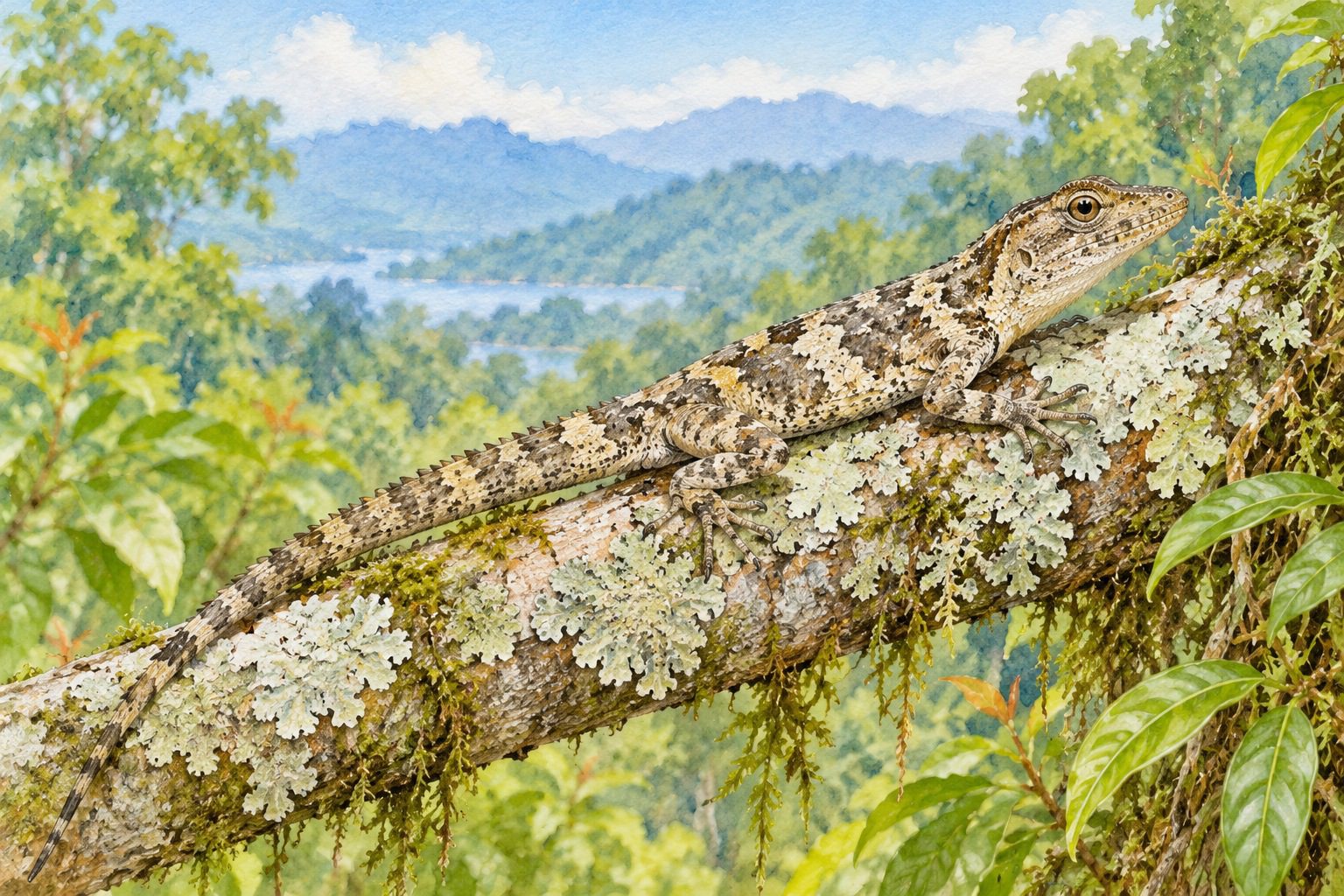
Charles Myers’s anole has very short legs and a shorter tail than many familiar anoles. Pale and dark mottling breaks up its outline on bark. A low, sawlike ridge along the tail is another feature used in careful comparisons.
This Pacific-slope species was separated from the lichen anole, Anolis pentaprion, through taxonomic study. Similar-looking animals can be different species. Observe the whole silhouette from the trail and ask a knowledgeable guide about the locality rather than assuming every mottled anole has the same name.
Identification
Key Features of the Charles Myers’s Anole
Very short limbs
Lichenlike pale and dark mottling
Relatively short tail with a low serrated ridge
Habitat & range
Pacific lowland and adjoining foothill habitats in Costa Rica, including the Central and South Pacific.
Local observations
Native reptile recorded in Costa Rica. Presence depends on suitable habitat and locality.
When to observe
Observe on permitted paths with an adult or qualified guide. Activity varies by species, place and weather; never disturb a hiding or resting animal.
Conservation & care
Observe from permitted paths with an adult. Do not touch, chase, catch or feed reptiles. Leave bark, stones, logs and leaf litter in place. Keep pets away and give animals an open escape route.
Threats & pressures
Protect natural shelters and connected habitat. Avoid collection, unnecessary clearing and deliberate killing. Leave wildlife in its habitat and support responsible observation.
Observation activity
Use the illustration to compare its short legs and tail with a long-legged forest anole.