

Nature Field Guide
Cope’s False Coral Snake
- Spanish name
- Falsa coral de Cope
- Scientific name
- Pliocercus euryzonus
What Do Pico & Tati Think?
Pico: “What helps this reptile fit into its habitat?”
Tati: “Let’s look at its shape, colors and surroundings while giving it plenty of space.”
Species overview
About the Cope’s False Coral Snake
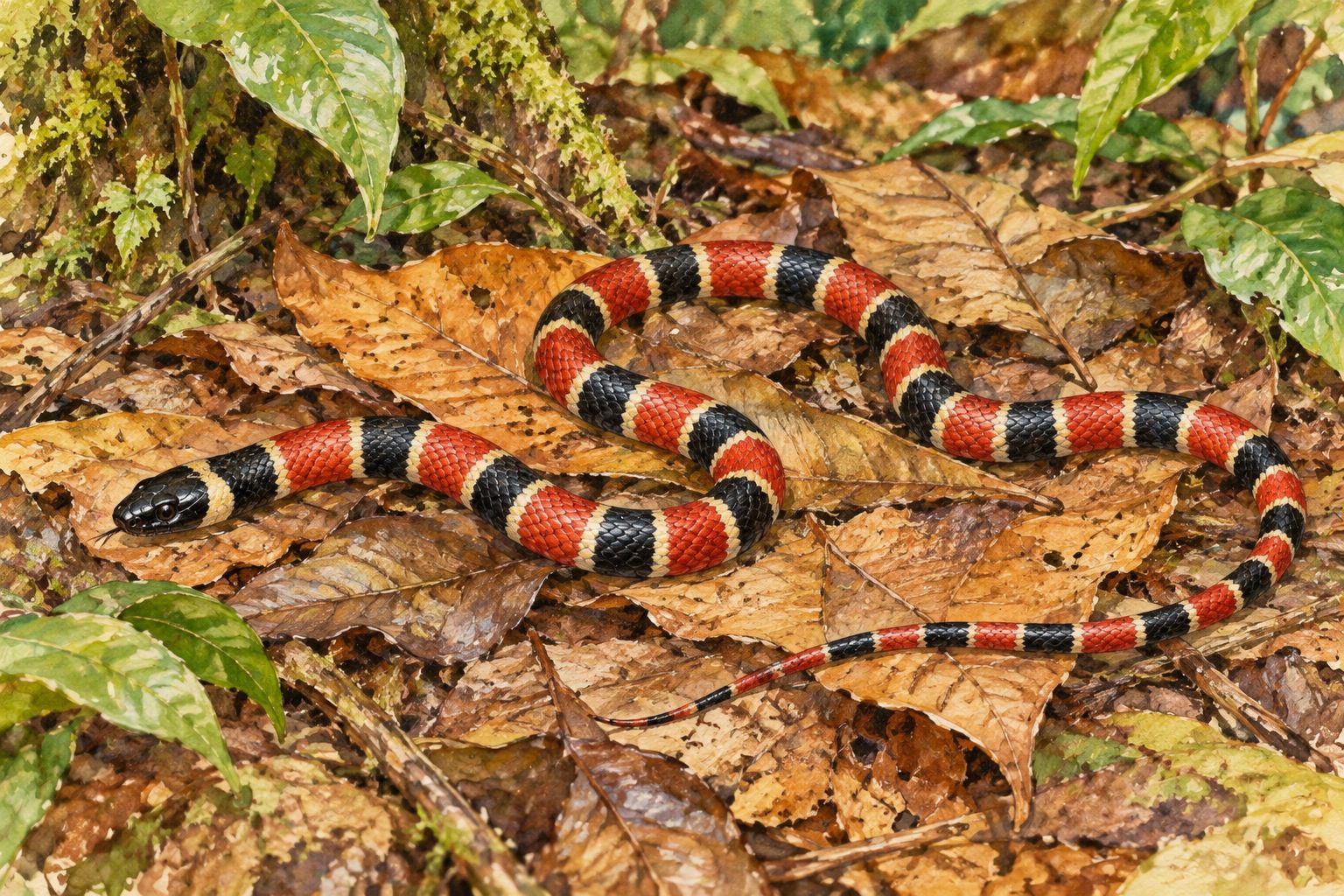
Cope’s false coral snake is slender and has a particularly long tail. Contrasting reddish and dark bands can resemble the warning colors of coral snakes. Pattern details can vary, making a distant glimpse hard to interpret.
It is recorded in Costa Rican humid forests, including the Caribbean lowlands. Keep the same distance you would from any unknown snake. The best discovery may be a safe photograph, a location note and a question to discuss with an expert after the animal has continued on its way.
Identification
Key Features of the Cope’s False Coral Snake
Slender banded body
Long fine tail
Dark head and contrasting reddish markings
Habitat & range
Humid Caribbean-slope forests and southern Pacific forest habitats; documented at Tirimbina.
Local observations
Native species recorded in Costa Rica. Sightings depend on suitable habitat and locality.
When to observe
Observe on a suitable guided outing. Activity varies with weather, season and locality; do not disturb a resting or hidden animal.
Conservation & care
Observe from a distance with an adult or qualified guide. Do not touch, catch, corner, feed or move any snake. Keep children and pets away. Colors, head shape and pupil shape must never be used to decide a snake is safe.
Threats & pressures
Protect connected habitat and natural shelters. Avoid collection, unnecessary clearing and deliberate killing. Leave wildlife in place and support responsible observation.
Observation activity
Compare body and tail proportions in the illustration. Keep the activity on paper, away from live snakes.
Explore by location
Caribbean · Central Pacific · Northern Plains · South Pacific · Alajuela · Heredia · Limón · Puntarenas · San José