

Nature Field Guide
Mangrove Tree Boa
- Spanish name
- Boa arborícola del Pacífico
- Scientific name
- Corallus ruschenbergerii
What Do Pico & Tati Think?
Pico: “What helps this reptile fit into its habitat?”
Tati: “Let’s look at its shape, colors and surroundings while giving it plenty of space.”
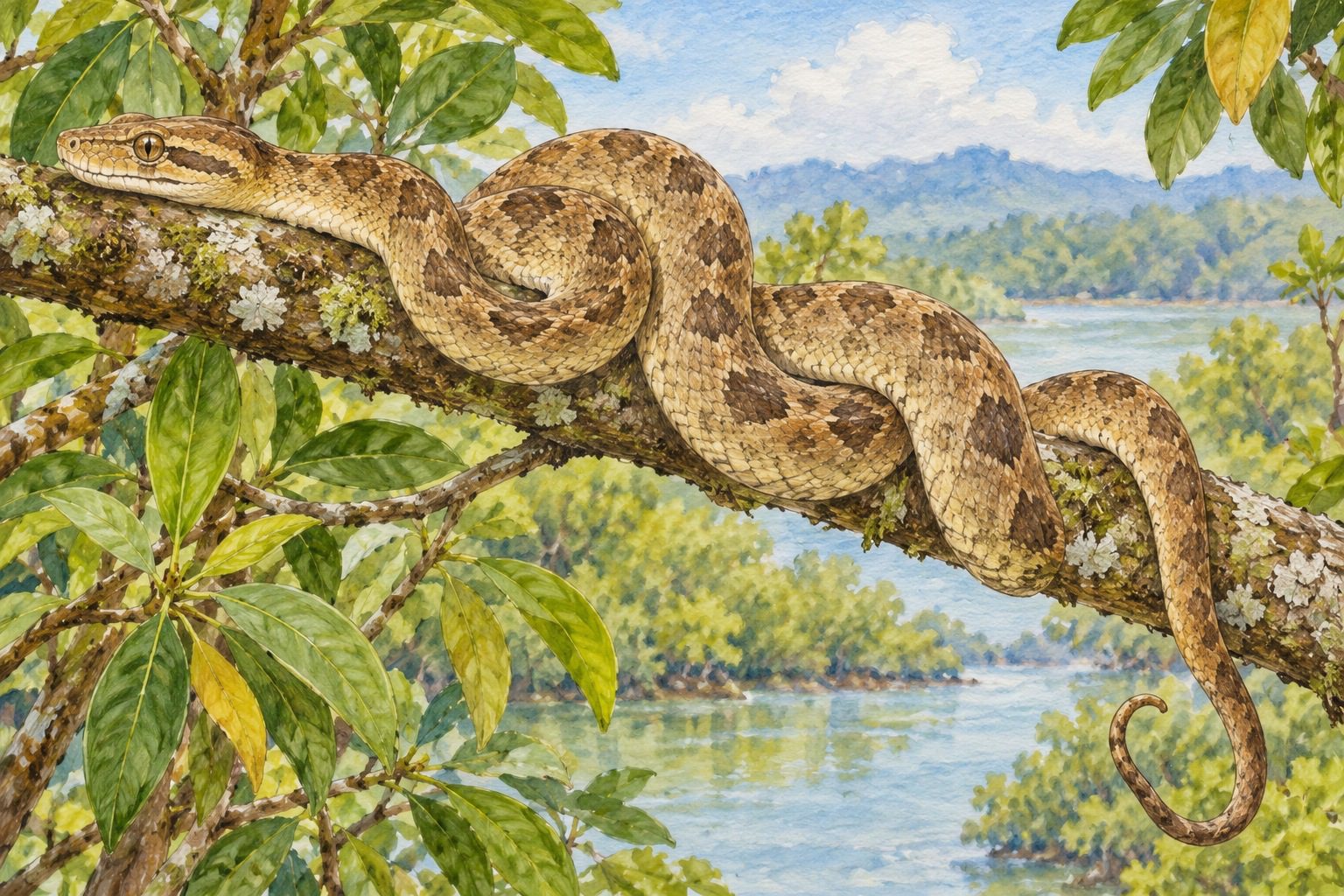
Species overview
About the Mangrove Tree Boa
The mangrove tree boa has a long climbing body and a tail that can help grip branches. Brown and tan patterns blend with bark and shadow. It is not the bright green emerald tree boa shown in many South American wildlife pictures.
In Costa Rica its range is southwestern. The common name does not mean it lives only in mangroves; suitable wooded habitats provide branches and cover too. Watch its resting position from a distance. Never pull a snake from a branch or shake the vegetation to make it move.
Identification
Key Features of the Mangrove Tree Boa
Long branch-climbing body
Brown-to-tan camouflage
Gripping tail and a distinct head
Habitat & range
Southwestern Costa Rican forests and wooded coastal habitats, including the South Pacific.
Local observations
Native species recorded in Costa Rica. Sightings depend on suitable habitat and locality.
When to observe
Observe on a suitable guided outing. Activity varies with weather, season and locality; do not disturb a resting or hidden animal.
Conservation & care
Observe from a distance with an adult or qualified guide. Do not touch, catch, corner, feed or move any snake. Keep children and pets away. Colors, head shape and pupil shape must never be used to decide a snake is safe.
Threats & pressures
Protect connected habitat and natural shelters. Avoid collection, unnecessary clearing and deliberate killing. Leave wildlife in place and support responsible observation.
Observation activity
Trace the curve of a resting snake in the illustration. Mark the branch points that support its body.