

Nature Field Guide
Caribbean Least Gecko
- Spanish name
- Gequito caribeño
- Scientific name
- Sphaerodactylus homolepis
What Do Pico & Tati Think?
Pico: “What helps this reptile fit into its habitat?”
Tati: “Let’s look at its shape, colors and surroundings while giving it plenty of space.”
Species overview
About the Caribbean Least Gecko
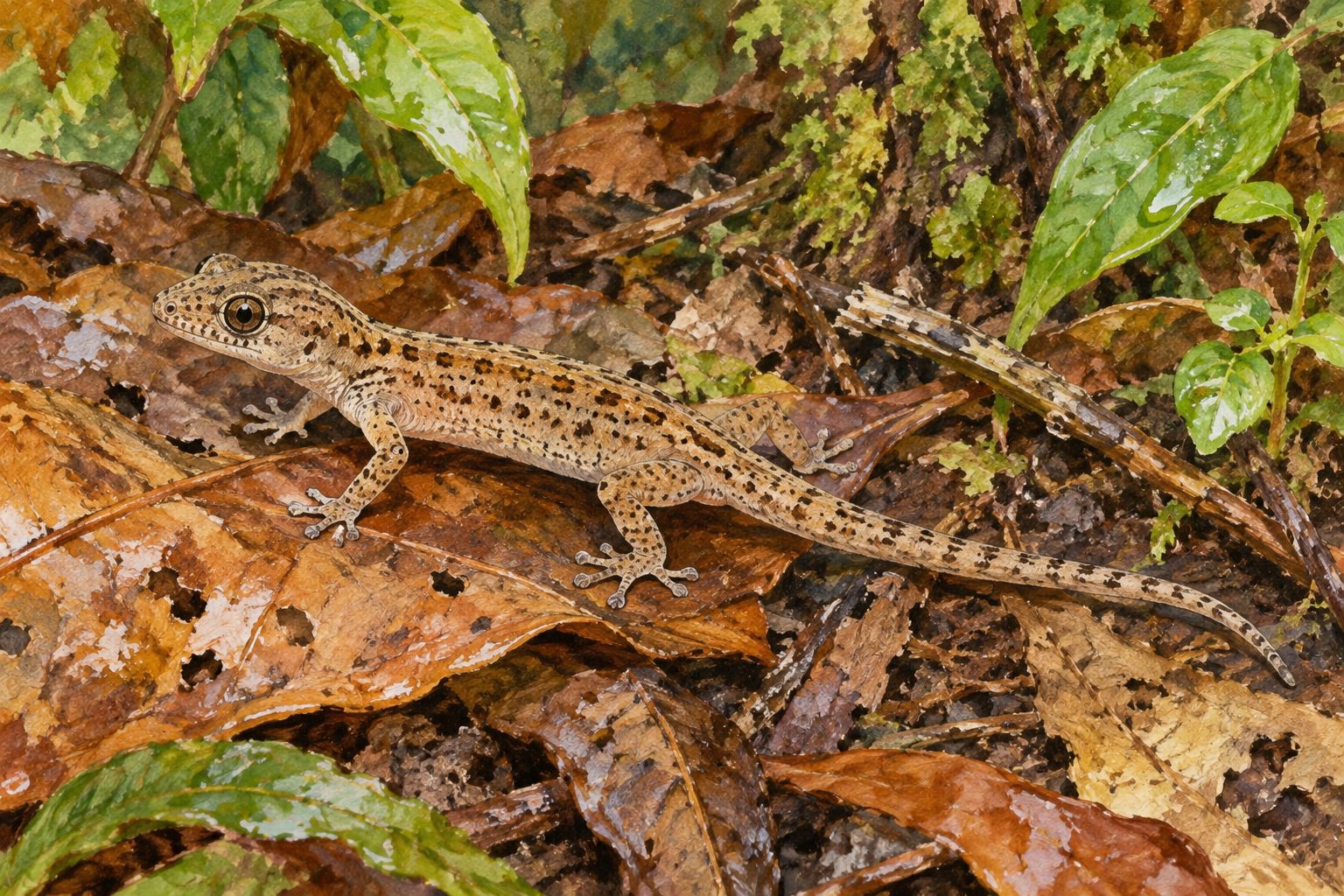
This tiny gecko has a rounded head, a narrow tail and small feet. Its brownish pattern can be difficult to separate from leaves and bark. The least geckos are easy to overlook beside Costa Rica’s much larger lizards.
The Caribbean least gecko is recorded in humid forest on the Caribbean slope, including Tirimbina. Treat a sighting as an opportunity to notice scale: a single leaf can be a large platform for such a small reptile. Avoid turning over logs or stripping bark to find one.
Identification
Key Features of the Caribbean Least Gecko
Tiny body and rounded head
Narrow tapering tail
Small feet unlike a large wall gecko’s broad pads
Habitat & range
Caribbean-slope lowland forest and northern humid lowlands, including the Sarapiquí area.
Local observations
Native species recorded in Costa Rica. Sightings depend on suitable habitat and locality.
When to observe
Observe on a suitable guided outing. Activity varies with weather, season and locality; do not disturb a resting or hidden animal.
Conservation & care
Observe with an adult from permitted paths. Do not touch, chase, catch or feed reptiles. Leave bark, logs, stones and leaf litter in place. Keep pets away and allow an open escape route.
Threats & pressures
Protect connected habitat and natural shelters. Avoid collection, unnecessary clearing and deliberate killing. Leave wildlife in place and support responsible observation.
Observation activity
Compare the gecko’s body length with the leaf in the illustration. Estimate how many could fit end to end.
Explore by location
Caribbean · Northern Plains · Alajuela · Heredia · Limón