

Nature Field Guide
Brown Wood Turtle
- Spanish name
- Tortuga de bosque / Montañera
- Scientific name
- Rhinoclemmys annulata
What Do Pico & Tati Think?
Pico: “What clues help us recognize this reptile?”
Tati: “Let’s notice its shape, markings and habitat from a respectful distance.”
Species overview
About the Brown Wood Turtle
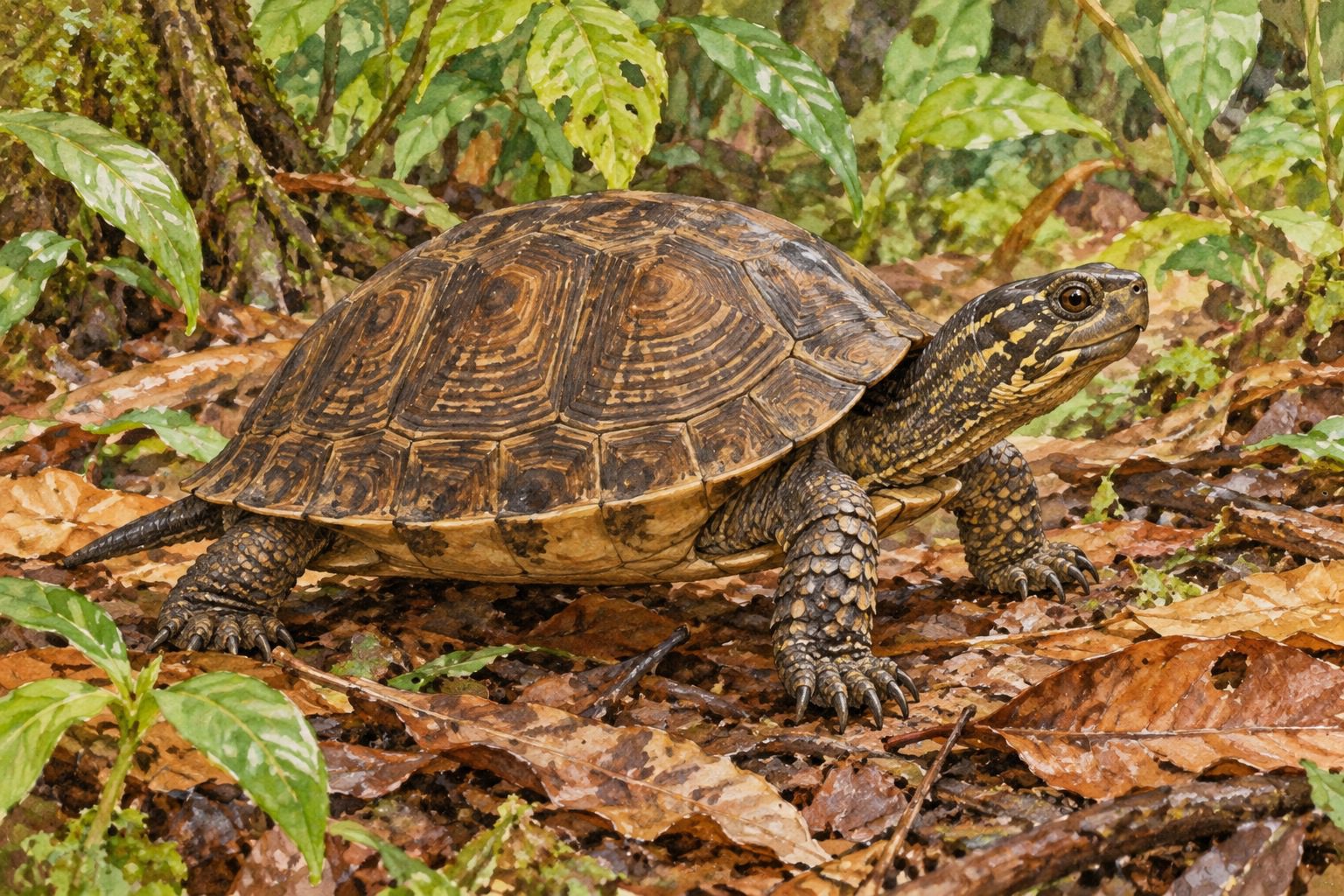
The brown wood turtle is largely terrestrial and is associated with rainforest habitat. Its shell is domed, and the pattern and color vary. It is a different species from the painted and black wood turtles already in the guide.
A Costa Rican example is documented from Tortuguero National Park. A turtle on land is not automatically lost or in need of being put into a pond. Watch without picking it up, moving it or offering food.
Identification
Key Features of the Brown Wood Turtle
Domed brown shell
Strong walking legs with claws
Forest-floor rather than open-water setting
Habitat & range
Caribbean-drainage rainforest and northern lowland habitat; Tortuguero is a documented protected-area example.
Local observations
Native reptile recorded in Costa Rica. Presence varies with suitable habitat and locality.
When to observe
Visibility varies with weather, habitat and the animal’s activity. Observe on an appropriate guided outing; never disturb a hiding animal to obtain a sighting.
Conservation & care
Observe with an adult from permitted paths. Do not catch, chase, touch or feed reptiles. Leave bark, logs, rocks and leaf litter in place. Keep pets away and allow animals an open escape route.
Threats & pressures
Protect habitat connections and natural shelters. Avoid road mortality, collection and deliberate killing. Leave reptiles in their habitat rather than keeping or relocating them.
Observation activity
Compare a wood turtle’s legs with a sea turtle’s flippers. Explain why their movement differs.
Explore by location
Caribbean · Northern Plains · Alajuela · Heredia · Limón · Tortuguero