

Nature Field Guide
Groove-billed Ani
- Spanish name
- Garrapatero piquiestriado / Tijo
- Scientific name
- Crotophaga sulcirostris
What Do Pico & Tati Think?
Pico: “Its beak has tiny lines!”
Tati: “Those grooves are helpful, but we need a clear view.”
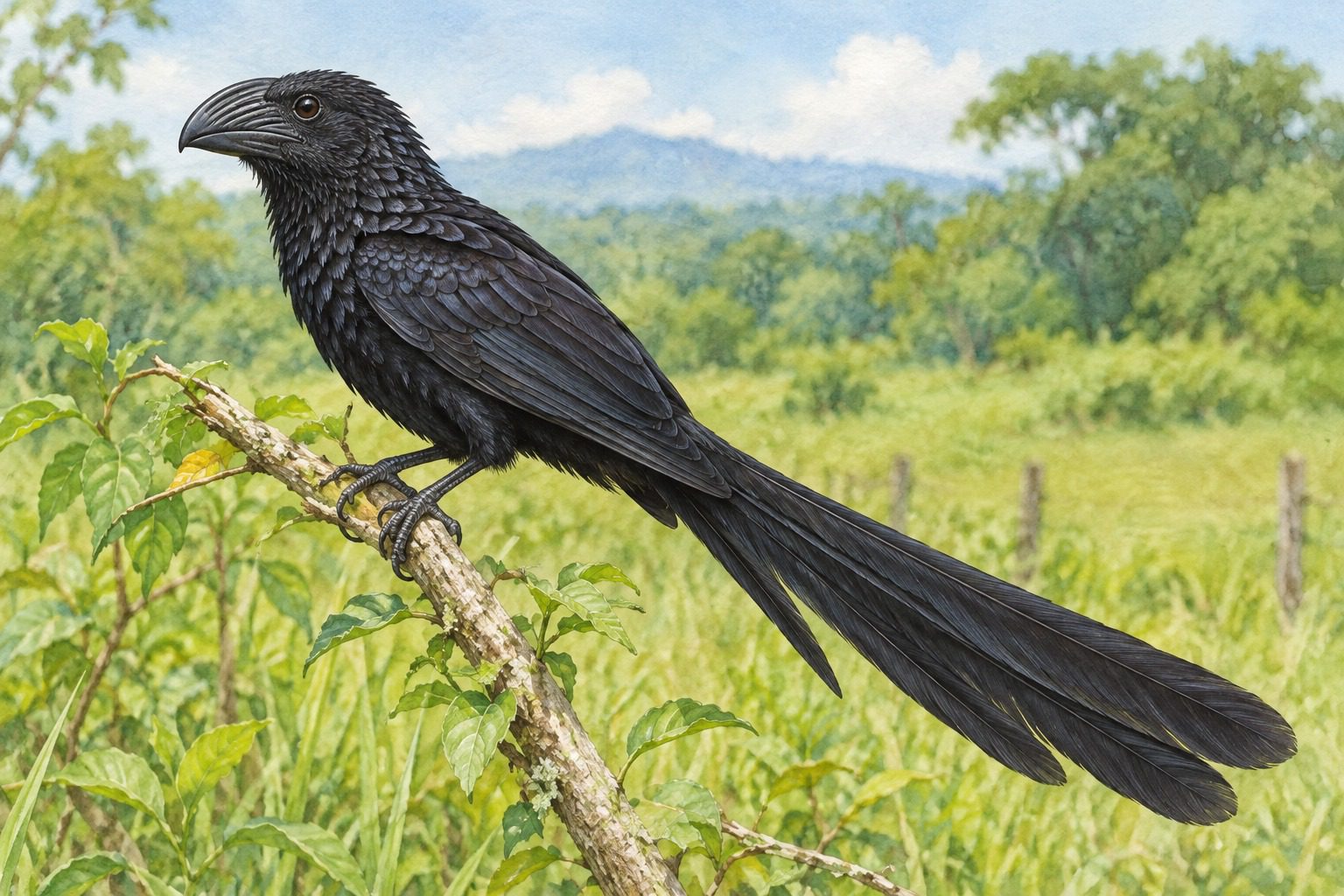
Species overview
About the Groove-billed Ani
The groove-billed ani is entirely dark with a very long tail and a deep, curved bill. Fine grooves on the upper bill are useful when a clear view is available.
Small groups forage in grassy and shrubby places. The grooves can be difficult to see, and smooth-billed anis occur in the wider region, so an uncertain bird is best left unidentified. Look at habitat, voice and bill together.
Identification
Key Features of the Groove-billed Ani
All-black plumage
Long loosely held tail
Heavy upper bill with grooves
Habitat & range
Open and shrubby country, pasture margins and settled areas across Costa Rica, reaching middle elevations. It is less frequent in much of the southern Pacific, where Smooth-billed Ani predominates.
Local observations
Costa Rica: resident.
When to observe
A resident bird; suitable habitat matters throughout the year. Quiet morning observation is a useful starting point, with activity varying by weather and location.
Conservation & care
Observe quietly from trails or established viewing areas. Give nests, roosts and feeding birds space. Do not handle, chase or lure birds with playback. Keep pets away from wildlife.
Threats & pressures
Protect native vegetation, reduce collision hazards around glass and keep cats away from birds. These are practical prevention priorities, not a claim of a measured decline at a specific Costa Rican site.
Observation activity
Compare close photographs of groove-billed and smooth-billed anis. Circle the bill difference.
Explore by location
Caribbean · Central Highlands · Central Pacific · Central Valley · Guanacaste · Northern Plains · Puntarenas & the Gulf Islands · South Pacific · Outdoor Adventures · Wildlife & Animals