

Nature Field Guide
Roadside Hawk
- Spanish name
- Gavilán chapulinero
- Scientific name
- Rupornis magnirostris
What Do Pico & Tati Think?
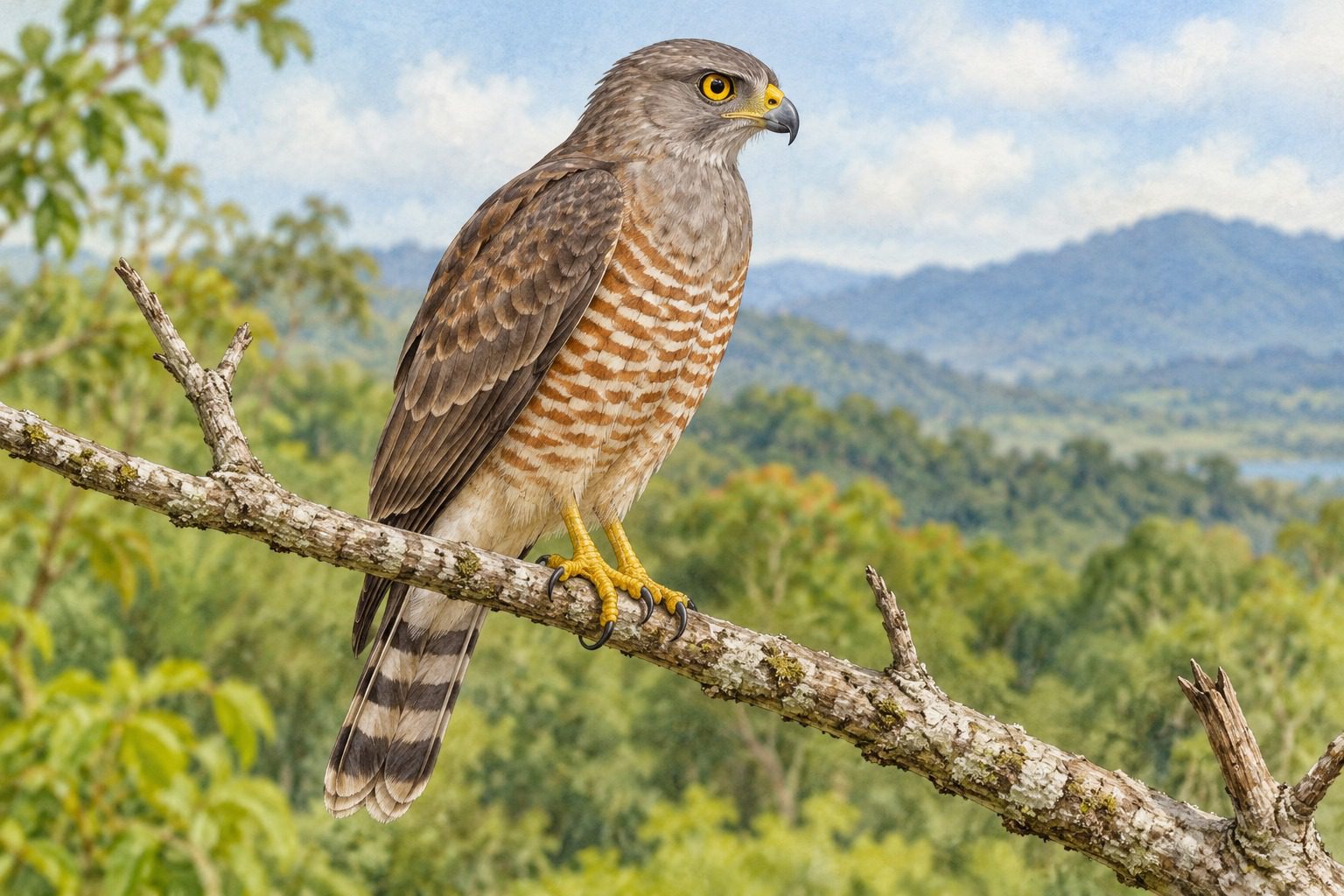
Pico: “I can see stripes across its belly!”
Tati: “Those bars and its yellow eye help us check the identification.”
Species overview
About the Roadside Hawk
Roadside hawks have piercing yellow eyes and a belly patterned with rufous-and-white bars. The head and upperparts vary from gray to brown, and the tail carries broad dark bands.
They often watch from a perch rather than spending long periods soaring. Insects and small vertebrates form much of the diet. The word roadside describes a frequent setting, not a reason to approach a bird from a busy road.
Identification
Key Features of the Roadside Hawk
Yellow eye
Rufous-and-white barred belly
Broad dark tail bands
Habitat & range
Lowland woodland edges, second growth and open country with trees on both slopes. More frequent in northern Pacific lowlands; local in the Central Valley and other areas.
Local observations
Costa Rica: resident.
When to observe
A resident bird; suitable habitat matters throughout the year. Quiet morning observation is a useful starting point, with activity varying by weather and location.
Conservation & care
Observe quietly from trails or established viewing areas. Give nests, roosts and feeding birds space. Do not handle, chase or lure birds with playback. Keep pets away from wildlife.
Threats & pressures
Protect native vegetation, reduce collision hazards around glass and keep cats away from birds. These are practical prevention priorities, not a claim of a measured decline at a specific Costa Rican site.
Observation activity
Use a photograph to distinguish belly bars from lengthwise streaks.
Explore by location
Caribbean · Central Pacific · Central Valley · Guanacaste · Northern Plains · Puntarenas & the Gulf Islands · South Pacific · Outdoor Adventures · Wildlife & Animals