

Nature Field Guide
Crested Caracara
- Spanish name
- Caracara cargahuesos
- Scientific name
- Caracara plancus
What Do Pico & Tati Think?
Pico: “That bird of prey is walking!”
Tati: “Caracaras often search on foot. Look at those long legs.”
Species overview
About the Crested Caracara
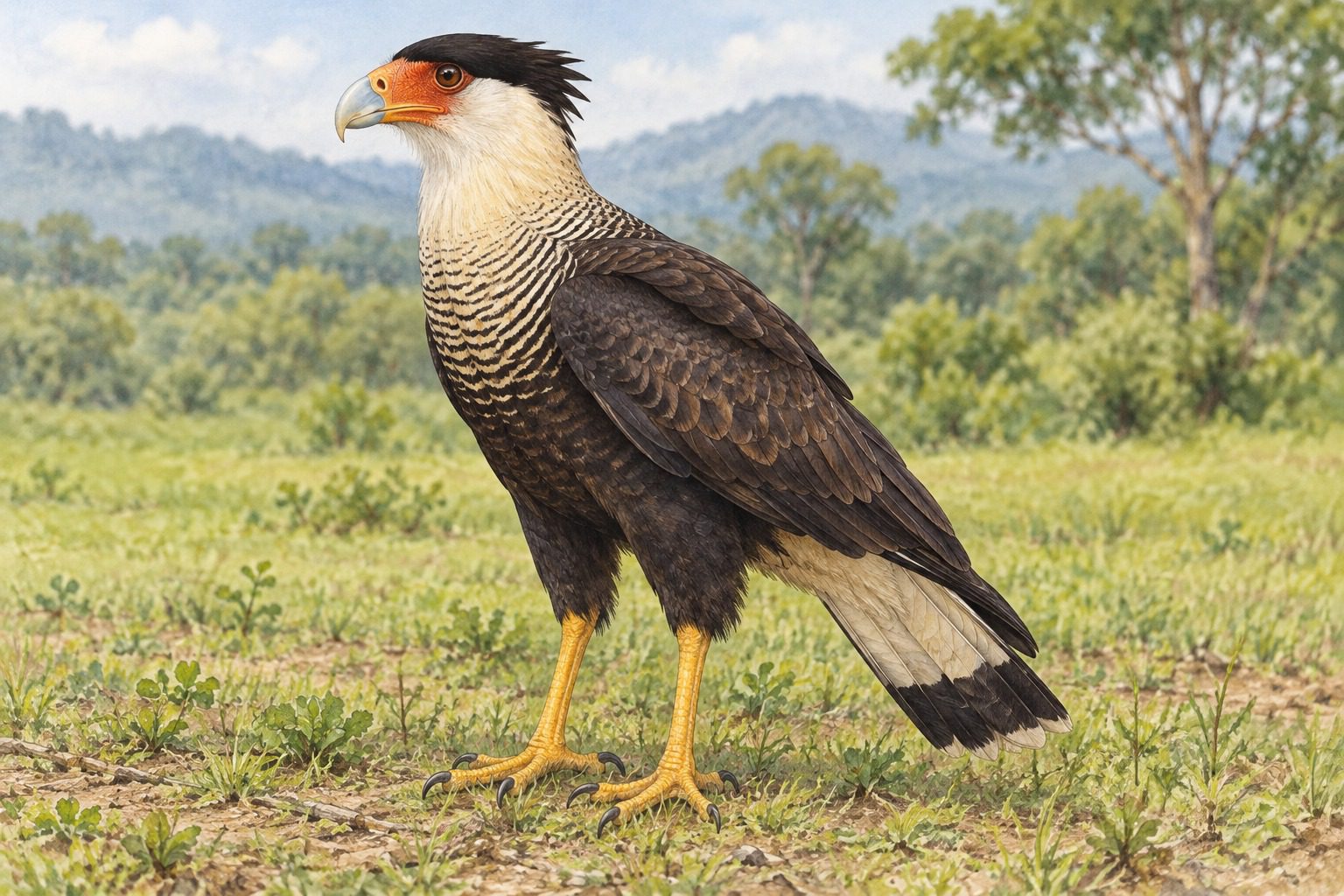
The crested caracara has a dark cap, pale neck and dark body. Orange-red bare facial skin contrasts with a pale hooked bill. Its long legs give it a distinctive walking silhouette.
It uses open habitats and can perch conspicuously on posts. Unlike many raptors that are mostly watched in flight, it often searches for food on foot. Keep a safe distance and observe from established viewing areas rather than stopping in traffic.
Identification
Key Features of the Crested Caracara
Dark cap and pale neck
Orange-red bare face
Long legs and hooked bill
Habitat & range
Open northwestern landscapes, pasture, farmland and beaches, with local occurrence around Rio Frio and occasional movement into San Carlos. This conservative set omits occasional Central Valley wanderers.
Local observations
Costa Rica: resident.
When to observe
A resident bird; suitable habitat matters throughout the year. Quiet morning observation is a useful starting point, with activity varying by weather and location.
Conservation & care
Observe quietly from trails or established viewing areas. Give nests, roosts and feeding birds space. Do not handle, chase or lure birds with playback. Keep pets away from wildlife.
Threats & pressures
Protect native vegetation, reduce collision hazards around glass and keep cats away from birds. These are practical prevention priorities, not a claim of a measured decline at a specific Costa Rican site.
Observation activity
Draw its standing outline beside a perched hawk. Compare leg length.
Explore by location
Guanacaste · Northern Plains · Puntarenas & the Gulf Islands · Guanacaste · Outdoor Adventures · Wildlife & Animals