

Nature Field Guide
Blue-gray Tanager
- Spanish name
- Tangara azuleja
- Scientific name
- Thraupis episcopus
What Do Pico & Tati Think?
Pico: “It looks like a piece of the sky!”
Tati: “Let’s see where the blue is pale and where it is brighter.”
Species overview
About the Blue-gray Tanager
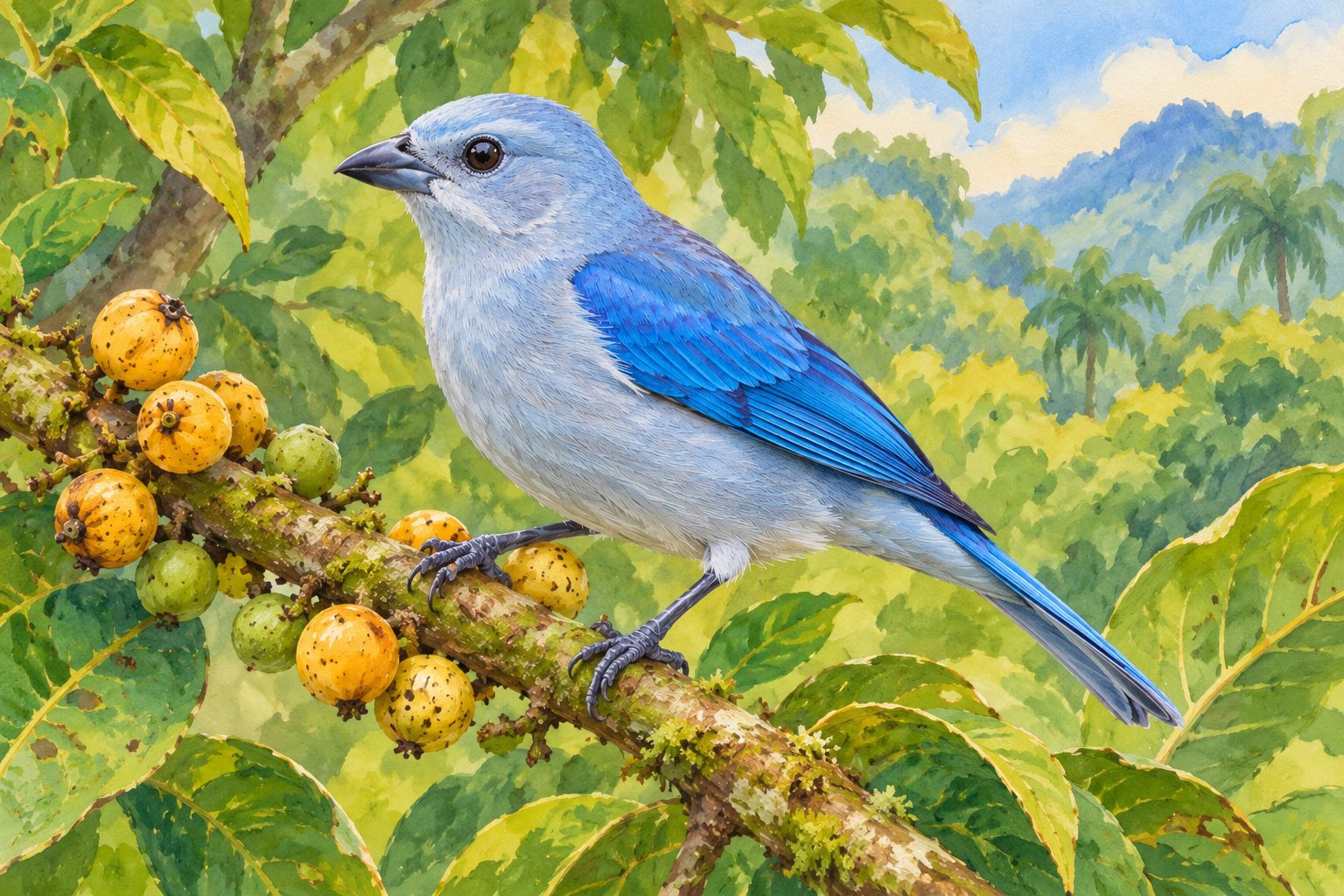
Blue-gray tanagers in Central America are softly blue-gray, with brighter blue areas on the wings and shoulders. A dark eye and fairly stout bill help define the face.
They feed in trees, often taking fruit, and readily use semi-open places with larger trees. South American populations can look different, including stronger white wing markings. Use Central American reference photographs for a Costa Rican comparison.
Identification
Key Features of the Blue-gray Tanager
Powder blue-gray body
Brighter blue wings and shoulder
Dark eye and stout bill
Habitat & range
Widespread in gardens, towns and semi-open wooded areas, mainly below about 2000 m. In the dry northwest it is less frequent and associated with moister sites near homes.
Local observations
Costa Rica: resident.
When to observe
A resident bird; suitable habitat matters throughout the year. Quiet morning observation is a useful starting point, with activity varying by weather and location.
Conservation & care
Observe quietly from trails or established viewing areas. Give nests, roosts and feeding birds space. Do not handle, chase or lure birds with playback. Keep pets away from wildlife.
Threats & pressures
Protect native vegetation, reduce collision hazards around glass and keep cats away from birds. These are practical prevention priorities, not a claim of a measured decline at a specific Costa Rican site.
Observation activity
Make a small color study showing three shades of blue on the bird.
Explore by location
Caribbean · Central Highlands · Central Pacific · Central Valley · Guanacaste · Northern Plains · Puntarenas & the Gulf Islands · South Pacific · Alajuela · Outdoor Adventures · Wildlife & Animals