

Nature Field Guide
Peach Palm / Pejibaye
- Spanish name
- Pejibaye
- Scientific name
- Bactris gasipaes
What Do Pico & Tati Think?
Pico: “These palm fruits are orange!”
Tati: “Let's learn why pejibaye is served cooked.”
Species overview
About the Peach Palm / Pejibaye
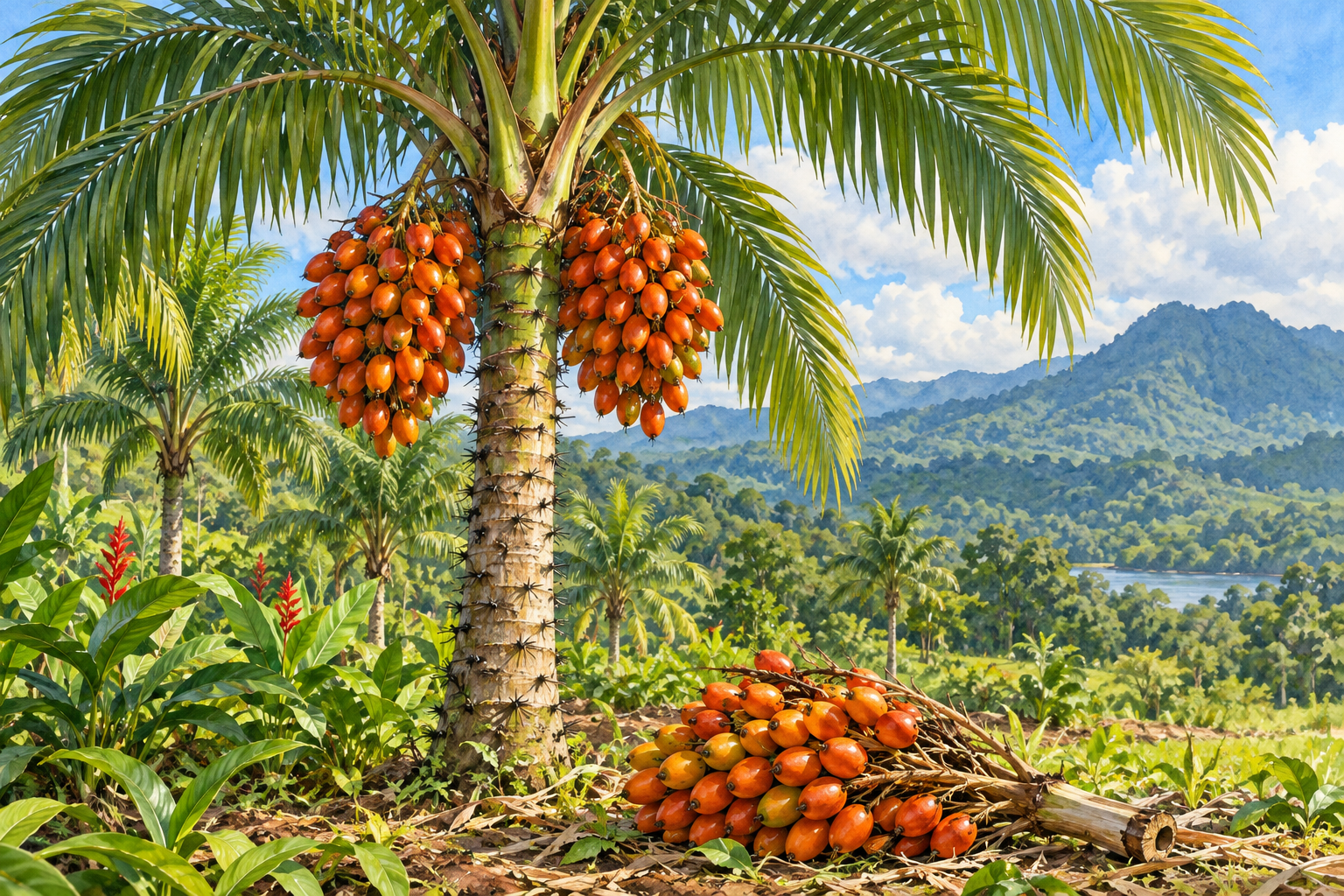
Pejibaye is the fruit of the peach palm. Clusters of small fruits can range from yellow to orange or red. The palm often has a spiny trunk, though cultivated forms vary.
In Costa Rica, the fruit is commonly served cooked. Tucurrique is associated with a pejibaye fair and cultivation. This card focuses on fruit; the same palm species is also grown for palmito, a different harvested part.
Identification
Key Features of the Peach Palm / Pejibaye
Palm with featherlike fronds
Dense clusters of small colored fruits
Many forms have spines on the trunk
Cooked fruit has a firm, starchy interior
Habitat & range
Warm Caribbean-side settings and cultivated farms around Tucurrique, Cartago. The site's Central Valley tag represents the Cartago cultivation example, not a claim that all valley climates suit this palm.
Local observations
UCR describes the fruit's importance in the Caribbean watershed and the Tucurrique fair. MAG documents fruit growers in Tucurrique. Fruit production and palmito production should not be treated as identical.
When to observe
Fruit availability follows local palm and harvest cycles. Confirm the timing of any farm demonstration or fair directly with the organizer.
Conservation & care
Avoid trunk spines, climbing and hanging fruit clusters. Taste only properly prepared fruit offered by a responsible adult or host.
Visit farms only with permission and follow the host's instructions. Stay clear of machinery, chemical applications and working areas. Do not pick or taste plants without a responsible adult and the host's approval.
Observation activity
Compare a fruit cluster with a guide-provided cooked fruit. Ask why fruit and palmito come from different parts of the palm.