

Nature Field Guide
Coconut
- Spanish name
- Coco
- Scientific name
- Cocos nucifera
What Do Pico & Tati Think?
Pico: “Is coconut water the same as coconut milk?”
Tati: “They are different! Let's ask our host to show us.”
Species overview
About the Coconut
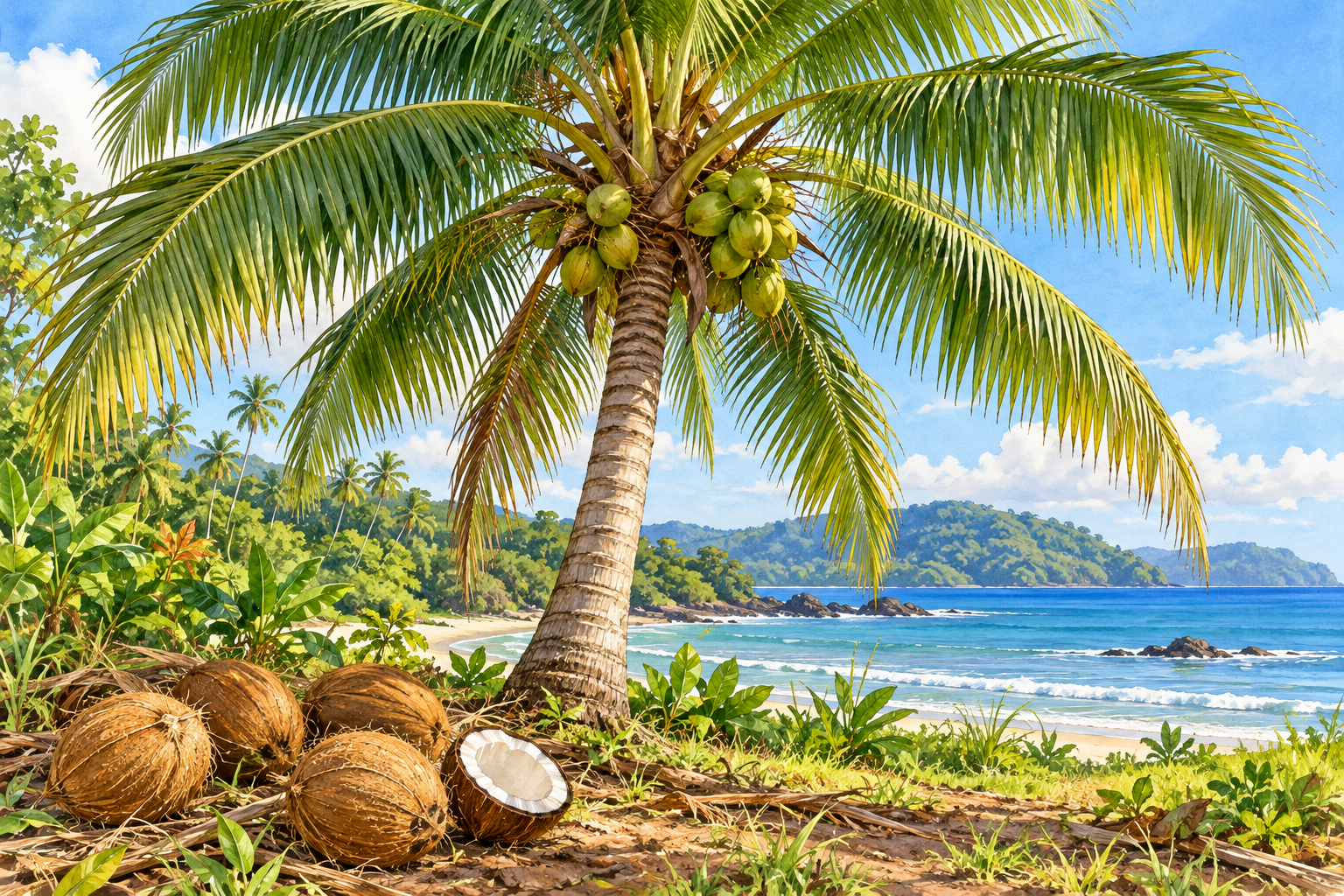
The coconut palm has a tall trunk, a crown of featherlike leaves and fruit clustered near the crown. A coconut has a fibrous outer covering around its hard shell.
The white flesh and coconut water are different parts of the fruit. Coconut milk is made by processing the flesh; it is not the clear water inside a coconut. Coco and pipa connect the palm with Costa Rica's Caribbean food traditions.
Identification
Key Features of the Coconut
Tall palm trunk with a crown of featherlike fronds
Fruit clusters near the crown
A thick fibrous outer husk
Hard inner shell around white flesh
Habitat & range
Cultivated palms in the Caribbean and Northern Plains. These tags focus on documented crop production, rather than every ornamental coconut palm on Costa Rica's coasts.
Local observations
MAG documents coconut growers in Limón, while a SEPSA production model was informed by producers in Sarapiquí. The cultural source describes Caribbean family-scale cultivation.
When to observe
Different stages of fruit may be visible on a palm. A host can explain the difference between a green pipa and a mature coconut.
Conservation & care
Do not climb palms or stand beneath hanging coconuts. Let trained adults handle harvesting and opening fruit.
Visit farms only with permission and follow the host's instructions. Stay clear of machinery, chemical applications and working areas. Do not pick or taste plants without a responsible adult and the host's approval.
Observation activity
Ask a host to show the husk, shell and flesh of a harvested coconut. Draw them as separate layers.