

Nature Field Guide
Common Beans
- Spanish name
- Frijoles
- Scientific name
- Phaseolus vulgaris
What Do Pico & Tati Think?
Pico: “The beans are inside a pod!”
Tati: “Let's count the seeds in a sample the farmer shares.”
Species overview
About the Common Beans
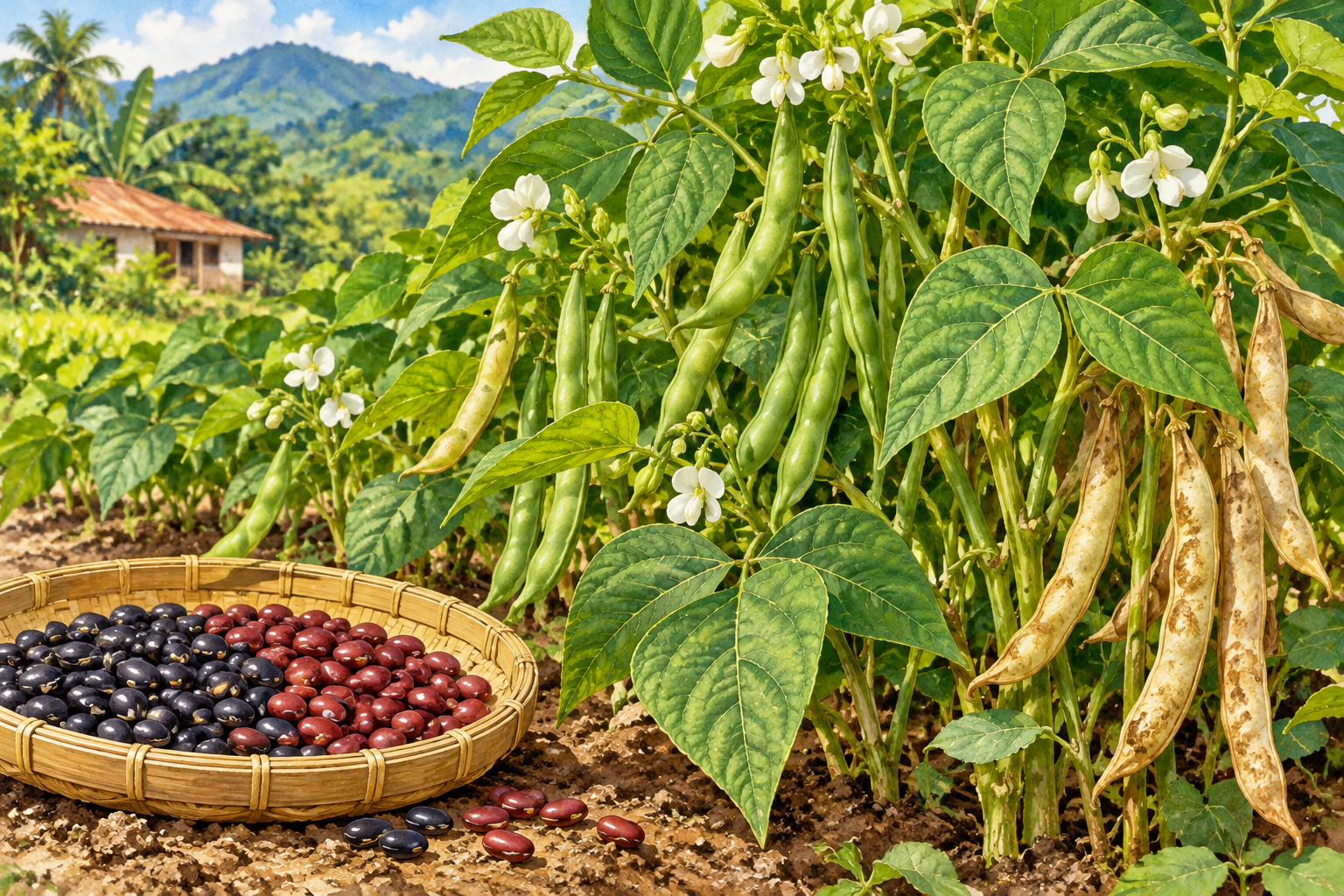
Common bean plants can grow as bushes or climb supports, depending on the variety. Their leaves usually have three leaflets, and pods hold the seeds we call beans.
Black, red and other beans can belong to the same species. In Costa Rica, cooked beans are central to meals such as gallo pinto. A dried bean is a seed, not a root or a small fruit like a coffee cherry.
Identification
Key Features of the Common Beans
Leaves made of three leaflets
Small flowers with a butterfly-like shape
Elongated pods containing seeds
Seed color and growth habit vary by variety
Habitat & range
Cultivated farms in the Northern Plains and South Pacific, with documented producer support in Santa Cecilia, La Cruz, Guanacaste. Household gardens and farms elsewhere may also grow beans; these tags are selected cultivation examples rather than a complete crop census.
Local observations
MAG documents maize–bean farming systems in Huetar Norte and Brunca. The selected tags represent sourced cultivation examples rather than all places where a garden can grow beans.
When to observe
Look for flowers, green pods or drying pods according to the local planting cycle. Seed harvest occurs after pod development.
Conservation & care
Do not eat raw or undercooked dry beans. Let an adult prepare food samples properly. Keep small seeds away from young children who may put them in their mouths.
Visit farms only with permission and follow the host's instructions. Stay clear of machinery, chemical applications and working areas. Do not pick or taste plants without a responsible adult and the host's approval.
Observation activity
With a host's sample, count the seeds in a pod. Compare a dry bean with the pod that contained it.