

Nature Field Guide
Cacao
- Spanish name
- Cacao
- Scientific name
- Theobroma cacao
What Do Pico & Tati Think?
Pico: “Chocolate starts with a tree!”
Tati: “Let's look for pods growing on the trunk.”
Species overview
About the Cacao
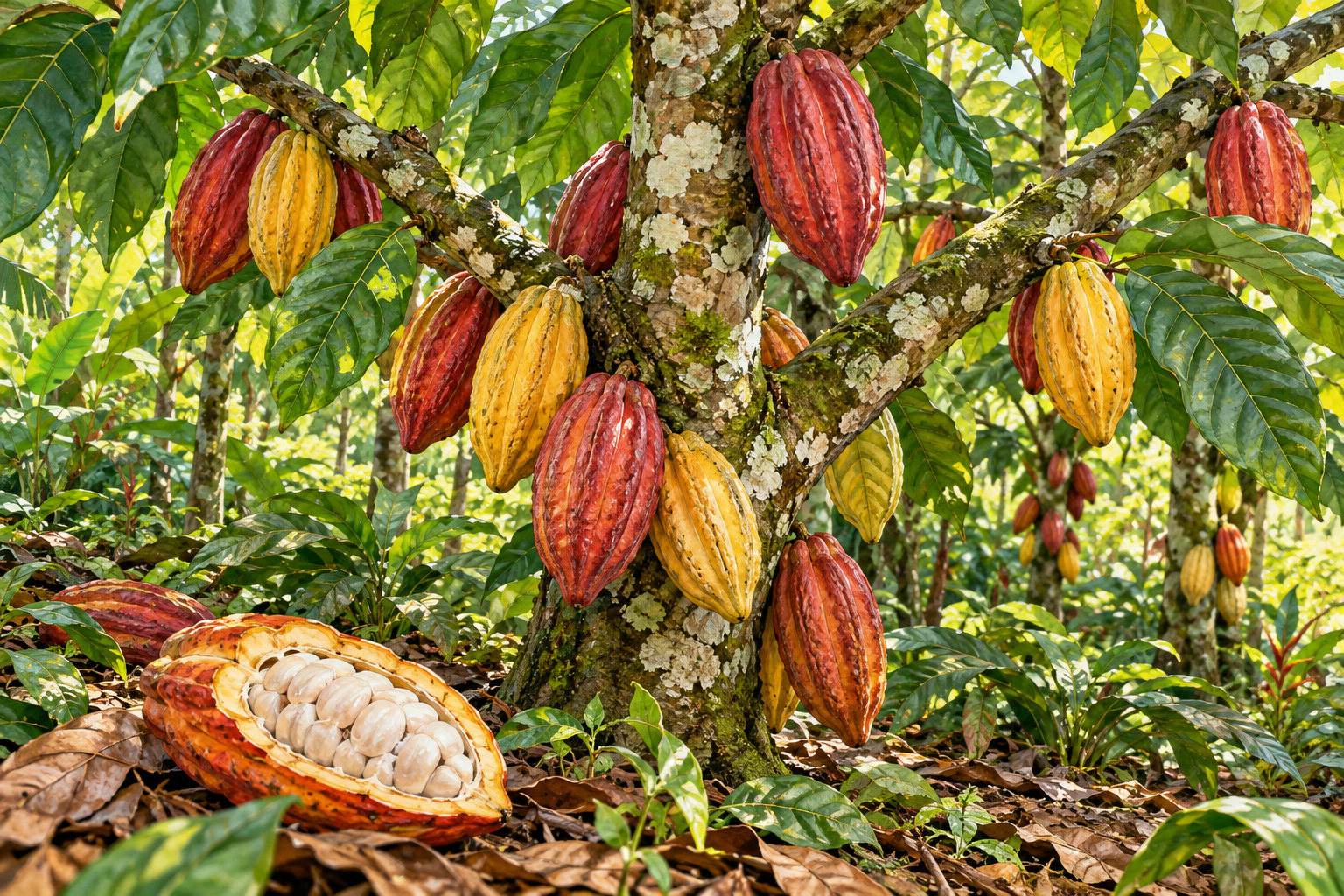
Cacao is an evergreen tree whose flowers and pods can grow directly from its trunk and larger branches. Inside a pod, seeds sit in pale pulp.
The seeds are processed to make cocoa and chocolate. Cacao cultivation links Costa Rica's humid farms with food traditions, including those of Caribbean communities. Observe the tree first, then ask a host how seeds are fermented and dried.
Identification
Key Features of the Cacao
Large oval leaves
Ribbed pods attached to trunk or large branches
Tiny flowers on woody parts of the tree
Opened pods reveal seeds surrounded by pale pulp
Habitat & range
Humid cacao farms in the Caribbean, Northern Plains and South Pacific. The national cacao plan identifies Talamanca, Upala and Limón among important production cantons.
Local observations
The National Cacao Plan 2018–2028 documents cultivation in the Caribe, Norte and Brunca regions. Tags describe cultivation, rather than a complete wild range.
When to observe
Flowering and fruiting vary among trees, varieties and farm conditions. Ask the host about ripe pods and processing demonstrations.
Conservation & care
Visit farms only with permission and follow the host's instructions. Stay clear of machinery, chemical applications and working areas. Do not pick or taste plants without a responsible adult and the host's approval.
Observation activity
Find where a pod attaches to the tree. Draw that position and compare it with fruit growing at the end of a twig.