

Nature Field Guide
Sugar Cane
- Spanish name
- Caña de azúcar
- Scientific name
- Saccharum spp. (cultivated hybrids)
What Do Pico & Tati Think?
Pico: “This tall grass gives us something sweet!”
Tati: “The juice comes from the stalk, and a host can show us how it is processed.”
Species overview
About the Sugar Cane
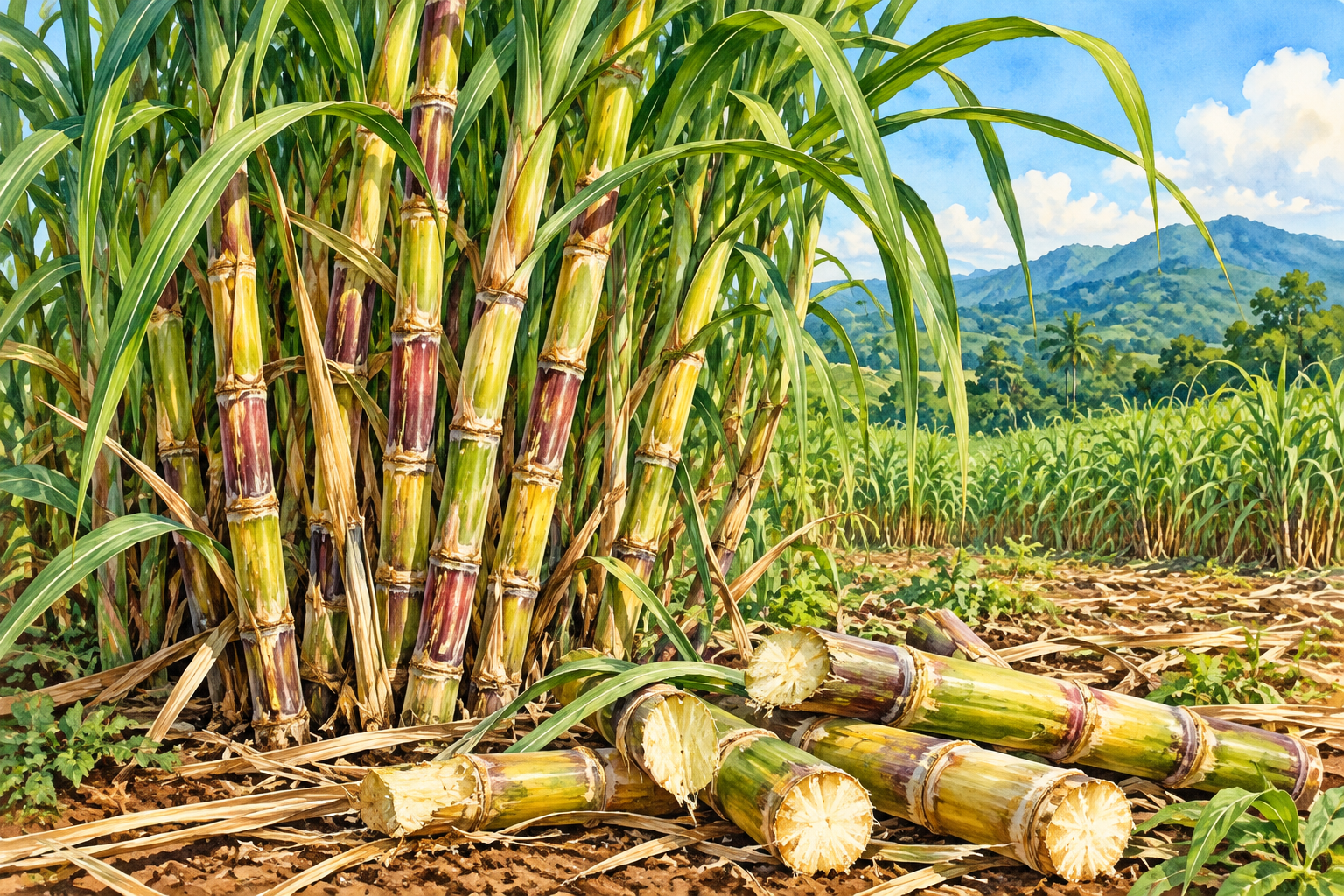
Sugar cane is a tall grass with jointed stalks and long leaves. Juice from the stalks can be processed into sugar and other sweeteners.
In Costa Rica, traditional trapiches connect cane farming with tapa de dulce. A farm visit can reveal how a living grass becomes a familiar ingredient, with machinery and hot processing areas observed from a safe distance.
Identification
Key Features of the Sugar Cane
Tall stalks with distinct joints
Long narrow grass leaves
Many stems growing in a clump
Cut stalks show a fibrous interior
Habitat & range
Cultivated cane fields, including Guanacaste, the Northern Zone, Puntarenas, the Central Valley and southern Costa Rica. Traditional trapiches require permission or a hosted visit.
Local observations
MAG and LAICA describe six cane-producing zones, including Turrialba–Jiménez. Website Region tags summarize these production zones and do not identify a public visitor entrance.
When to observe
Growing stalks and harvested cane are visible at different points in the farm cycle. Milling schedules depend on the region and operator.
Conservation & care
Stay away from cutting tools, rollers, moving machinery and hot syrup. Let the host handle any cane samples.
Visit farms only with permission and follow the host's instructions. Stay clear of machinery, chemical applications and working areas. Do not pick or taste plants without a responsible adult and the host's approval.
Observation activity
Count the joints on a guide-provided stalk. Ask which part supplies the juice and what happens to the fibrous leftovers.
Explore by location
Central Pacific · Central Valley · Guanacaste · Northern Plains · South Pacific