

Nature Field Guide
Northern Neotropical River Otter
- Spanish name
- Nutria mesoamericana
- Scientific name
- Lontra annectens
What Do Pico & Tati Think?
This river otter is a water-adapted member of the weasel family.
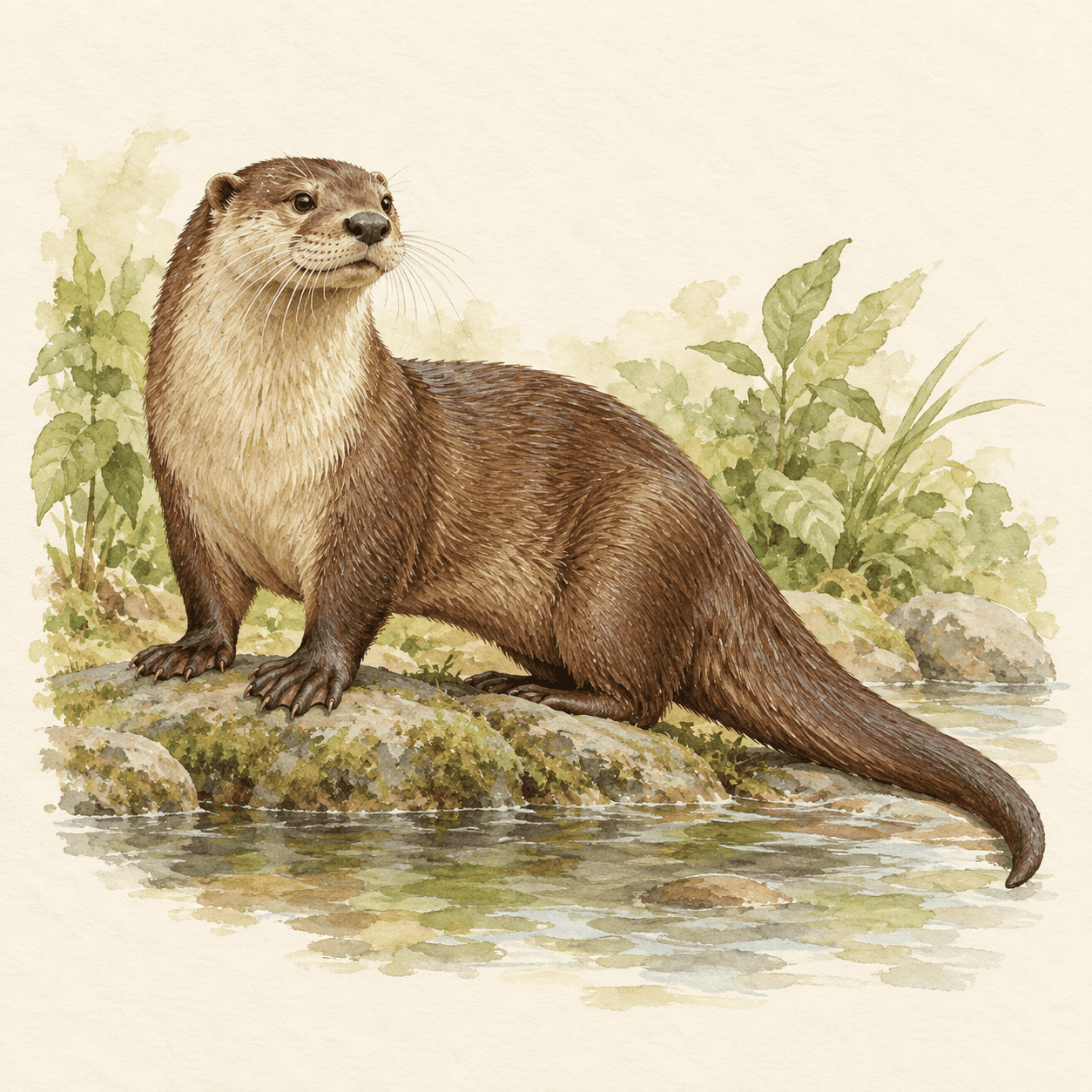
Species overview
About the Northern Neotropical River Otter
This river otter is a water-adapted member of the weasel family. A streamlined body, webbed feet and a strong tail help it move through freshwater. It feeds on aquatic animals, including fish and crustaceans. Recent genetic research recognizes Lontra annectens separately from the broader Neotropical otter species used in older guides. Studies document it in northern Costa Rica's Tortuguero and Sarapiquí landscapes. Clean waterways and sheltered riverbanks provide important habitat. A river visit may reveal tracks or other evidence even when the otter itself stays out of sight.
Explorer activity: Design an otter-friendly river on paper. Include clean water, streamside plants and places for people to observe without blocking the bank.
Your discovery notes: Record the date, place and habitat. Add a sketch or a photograph taken from a distance. Write what you observed and one question you would like to investigate. If the species is uncertain, keep that uncertainty in your notes.
Identification
Key Features of the Northern Neotropical River Otter
Brown streamlined body with a paler throat.
Small rounded ears, whiskered muzzle and webbed feet.
Long thick tail tapering toward its tip.
Habitat & range
Rivers, streams and wetlands; documented study areas include Tortuguero and the Sarapiquí basin.
Local observations
Recorded in Costa Rica. This is a country-level profile; it does not establish occurrence in every province, town or nature site. Current species name follows the Mammal Diversity Database; older Costa Rican references may use the broader former species name.
When to observe
Ask a guide about local activity and view quietly from an established bank or responsible boat trip.
Conservation & care
Explore with an adult or local guide. Observe quietly from a distance, stay on established trails and leave shelter undisturbed. Do not feed, touch, capture or corner wildlife. Keep pets away. Stay clear of slippery or unstable banks; do not enter water to follow an animal.
Conservation assessment
Mammal Diversity Database lists this recently separated species as Not Evaluated, checked October 2026. Do not transfer the older Lontra longicaudis assessment automatically.
Observation activity
Design an otter-friendly river on paper. Include clean water, streamside plants and places for people to observe without blocking the bank.