

Nature Field Guide
Wrinkled Penshell
- Spanish name
- Concha abanico
- Scientific name
- Pinna rugosa
What Do Pico & Tati Think?
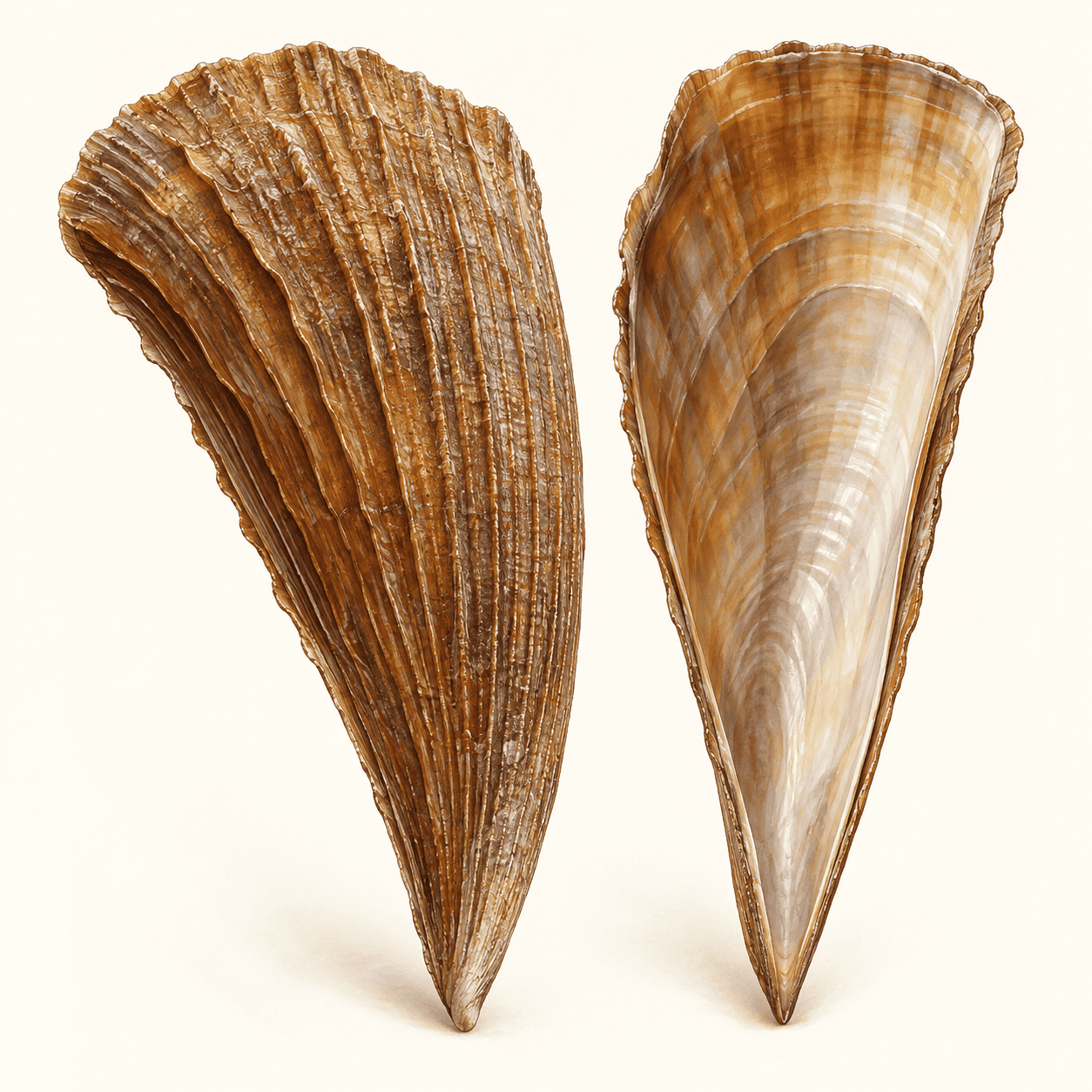
A long, fan-like penshell lives partly buried in the bottom.
Species overview
About the Wrinkled Penshell
This large bivalve occurs in muddy bays and can be partly buried. Its pointed end and widening outline provide a starting point for recognizing a penshell. Similar species still require careful comparison.
Explorer activity: Draw an outline from a photograph. Label the narrow and wide ends, then compare its proportions with a round clam shell.
Your discovery notes: Record the date, place and habitat, then add a sketch or photograph. If you cannot confirm the species, label it “unidentified shell” and keep your observations.
Identification
Key Features of the Wrinkled Penshell
Long shell that widens away from a pointed end.
Two valves make up the whole shell.
Wrinkled or ribbed surfaces should be compared with a reference.
Habitat & range
Muddy bay bottoms, including areas influenced by mangrove tidal flow.
Local observations
Pacific Costa Rica: Bahía Culebra published record. This supports regional inclusion, not a confirmed Tamarindo Beach sighting.
When to observe
Tides and conditions affect visibility. Let an adult or local guide choose a safe observation time; this card does not promise a seasonal sighting.
Conservation & care
Observe and photograph shells where they are. Leave living animals, occupied shells and empty shells in place. Do not pry animals from rocks, dig in mangroves or put fingers into shell openings. Explore with an adult or guide, follow site rules and stay clear of surf and slippery rocks.
Observation activity
Draw an outline from a photograph. Label the narrow and wide ends, then compare its proportions with a round clam shell.