

Nature Field Guide
Northern Raccoon
- Spanish name
- Mapache
- Scientific name
- Procyon lotor
What Do Pico & Tati Think?
Pico: “The rings on its tail are easy to notice!”
Tati: “We keep the rubbish closed so it finds natural food.”
Species overview
About the Northern Raccoon
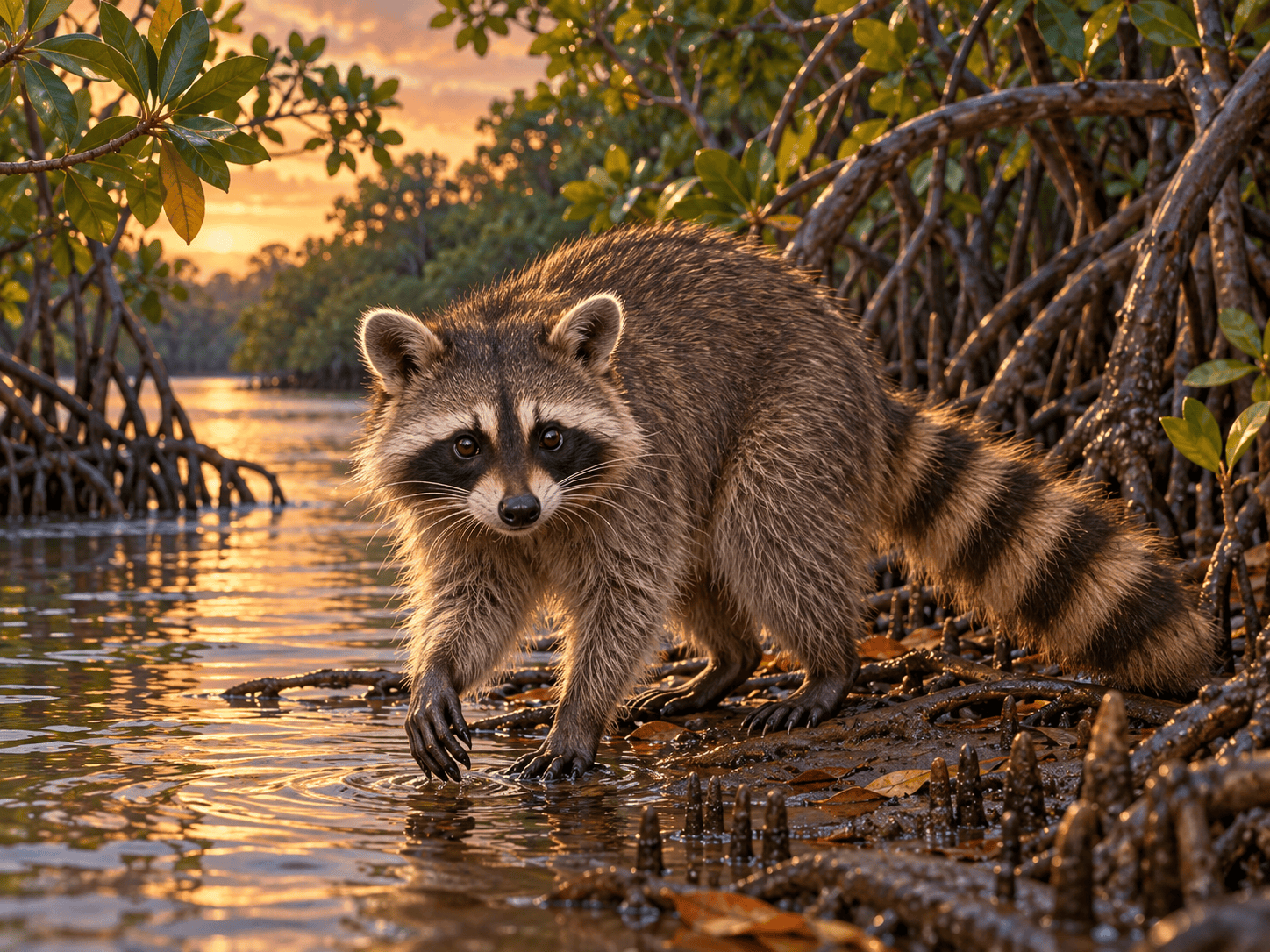
The Northern Raccoon has a dark facial mask, rounded ears and a long tail with clear rings. Its relatively compact body and mask distinguish it from the longer-snouted coati, although both belong to the same mammal family.
Raccoons often use habitat near water, including rivers, mangroves and wooded wetlands. They eat a variety of plant and animal foods and are mainly active at night. Daytime shelters include tree hollows, rocks and burrows. Access to human rubbish can change their feeding habits and bring them close to people. Secure bins and quiet observation help maintain the difference between a wild forager and an animal drawn into an unhealthy encounter.
Identification
Key Features of the Northern Raccoon
Dark mask across the face.
Bold rings along the tail.
Rounded ears with pale edges.
Habitat & range
Reserva Sierra Zapote, Las Juntas / Abangares, and other suitable wooded water-edge habitats.
Local observations
The Sierra Zapote study recorded Procyon lotor during 2020–2021. Its low photo count is not a measure of the entire population.
When to observe
Observe from authorized routes with a local guide. Activity, weather and food availability change encounters; a documented location is not a promise of a sighting.
Conservation & care
Keep a respectful distance and leave an open route for the animal. Stay on authorized paths, secure food and rubbish, and observe without feeding, touching, baiting or chasing.
Observation activity
Compare raccoon and coati pictures, then check which nose and tail features support your identification. Keep food waste inaccessible.
Explore by location
Central Pacific · Guanacaste · Northern Plains · Guanacaste · Heredia · Puntarenas · Las Juntas