

Nature Field Guide
Jaguarundi
- Spanish name
- Yaguarundí / León breñero
- Scientific name
- Herpailurus yagouaroundi
What Do Pico & Tati Think?
Pico: “That outline is different from the spotted cats!”
Tati: “A brief view still needs careful identification.”
What does Least Concern mean?
In the linked conservation assessment, this species does not qualify as threatened or near threatened with extinction. It still needs care: local populations and habitats can face problems even when the species has a lower extinction risk overall.
This label describes conservation status. It does not tell us whether a plant is safe for children or pets. Select the status button to read the assessment.
Species overview
About the Jaguarundi
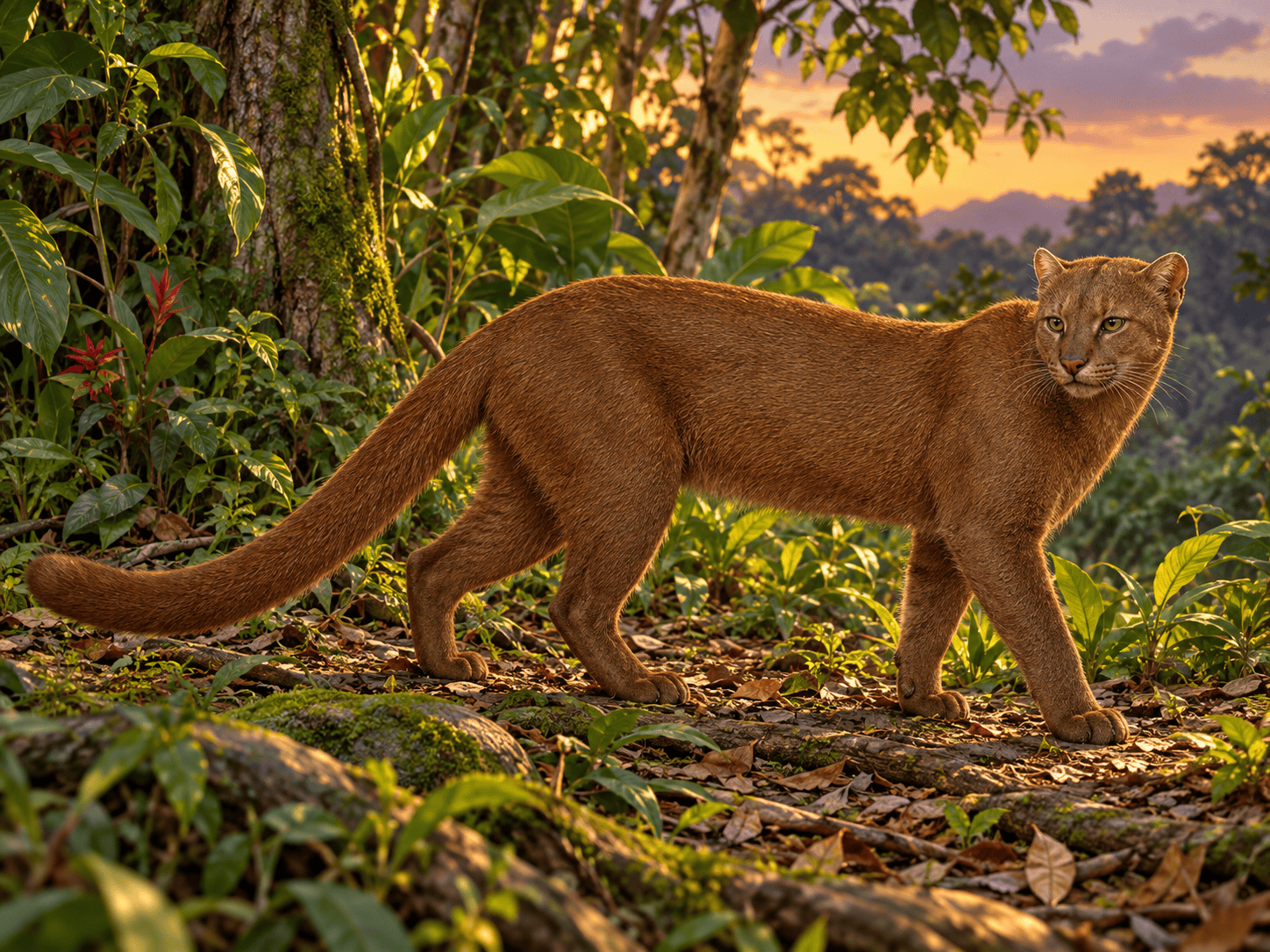
The Jaguarundi is a small wild cat with a long body, short legs and a plain coat rather than the rosettes of a Jaguar. Its name can be misleading: it is a distinct species, not a young jaguar. Older sources also use Puma yagouaroundi.
Jaguarundis use varied covered habitats, including forest, scrub and regenerating vegetation, often near water. They hunt small animals and can remain difficult to detect despite their habitat flexibility. A published camera-trap study recorded the species at Sierra Zapote in Guanacaste. That observation establishes occurrence; a very small number of photographs cannot measure the full local population or show its long-term trend.
Identification
Key Features of the Jaguarundi
Long low body and short legs.
Plain gray-brown or reddish coat, not rosettes.
Small rounded ears and long tail.
Habitat & range
Reserva Sierra Zapote in Las Juntas district, Abangares, Guanacaste.
Local observations
The 2020–2021 Sierra Zapote camera-trap study recorded Jaguarundi. Las Juntas is the surrounding district tag, not an urban sighting claim.
When to observe
Observe from authorized routes with a local guide. Activity, weather and food availability change encounters; a documented location is not a promise of a sighting.
Conservation & care
Keep a respectful distance and leave an open route for the animal. Stay on authorized paths, secure food and rubbish, and observe without feeding, touching, baiting or chasing.
Threats & pressures
Loss of suitable habitat and prey is a documented concern even where the global species category is Least Concern.
Protection & recovery
Costa Rica’s government wildlife guide explicitly identifies this species as protected nationally. This legal designation is separate from its global IUCN category.
Conservation assessment
Global IUCN category as reported by the linked source, checked 7 October 2026. The source does not give an assessment year here. National legal protection and local abundance are separate questions.
Observation activity
Sketch three features from a safe viewing point. Note the habitat and what the animal actually does; keep “seen”, “heard” and “possible tracks” as separate observations.
Explore by location
Guanacaste · Northern Plains · Guanacaste · Heredia · Las Juntas