

Nature Field Guide
Black-crowned Night-Heron
- Spanish name
- Martinete coroninegro
- Scientific name
- Nycticorax nycticorax
What Do Pico & Tati Think?
Pico: “This heron looks shorter and rounder than the others!”
Tati: “It may be resting now and feeding later.”
Species overview
About the Black-crowned Night-Heron
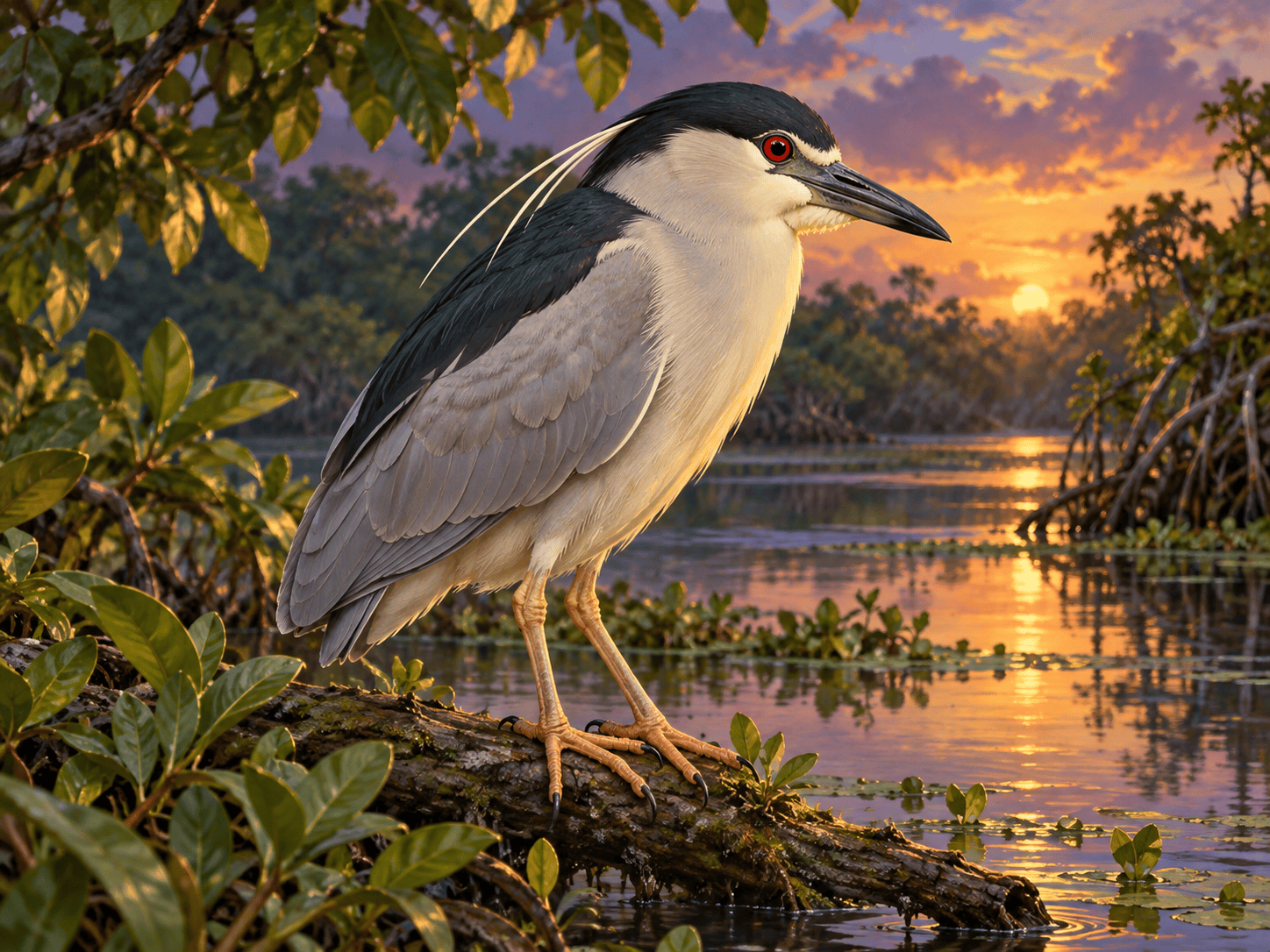
The Black-crowned Night-Heron is stockier and shorter-necked than many familiar herons. Adults combine a dark crown and back with pale gray plumage. Young birds are brown and spotted, so they can look like a different species.
These birds often rest among branches during daylight and forage in the evening or at night. They catch fish and other small animals in fresh, brackish and saltwater habitats. Nesting takes place in colonies, often over water or on islands. Palo Verde’s Isla de Pájaros is an important documented colony, making distant observation and protection of undisturbed roosting vegetation particularly valuable.
Identification
Key Features of the Black-crowned Night-Heron
Stocky body and short-looking neck.
Adult: black crown and back, gray wings.
Young: brown plumage with pale spots.
Habitat & range
Wetland and mangrove populations include the Tempisque and Gulf of Nicoya landscape and local Caribbean lowlands. Resident birds and seasonal visitors both occur.
Local observations
SINAC identifies an important Black-crowned Night-Heron colony at Isla de Pájaros. Bagaces is the park gateway, not a guarantee of birds in town.
When to observe
Dusk and evening are natural feeding periods, while birds may rest during the day. Observe only during permitted visiting hours and on authorized routes.
Conservation & care
Stay on authorized trails or viewing routes. Give birds space, keep voices low and leave nests undisturbed. Observe without bait, feeding or recorded calls.
Threats & pressures
Wetland drainage, development and contaminated runoff can degrade habitat and water quality.
Observation activity
Compare a resting bird’s posture with a feeding bird’s posture from an approved viewpoint. Do not disturb a daytime roost.
Explore by location
Caribbean · Guanacaste · Northern Plains · Puntarenas & the Gulf Islands · Guanacaste · Bagaces