

Nature Field Guide
Roseate Spoonbill
- Spanish name
- Espátula rosada
- Scientific name
- Platalea ajaja
What Do Pico & Tati Think?
Pico: “Why does its bill widen at the end?”
Tati: “Let’s watch how it moves through the water.”
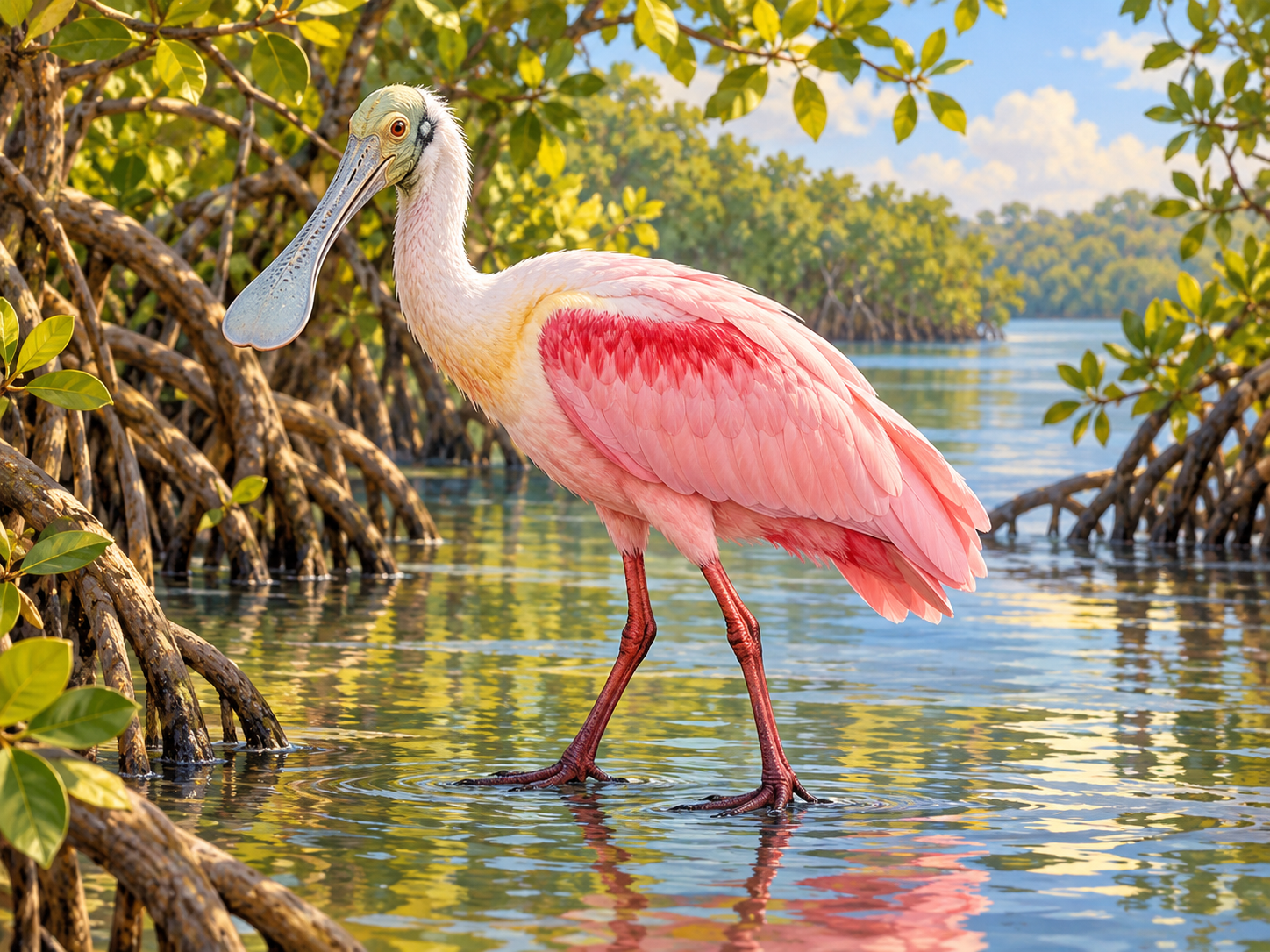
Species overview
About the Roseate Spoonbill
The Roseate Spoonbill feeds by sweeping its partly open, flattened bill through shallow water. Small fish, crustaceans and other aquatic animals are caught as the bill detects prey. Pink plumage is another clue, with dietary pigments contributing to its color.
These social birds gather for feeding and roosting and may nest beside other waterbirds. They use fresh, brackish and coastal wetland habitats. An adult’s bill is distinctive, but very young chicks do not yet have the fully developed spoon shape. Protecting both nesting vegetation and shallow feeding water is important: a safe colony alone cannot provide every resource a bird requires.
Identification
Key Features of the Roseate Spoonbill
Pink plumage, often paler in young birds.
Long bill with a broad, flattened spoon tip.
Side-to-side bill sweeping in shallow water.
Habitat & range
Shallow wetlands around Tempisque, Rio Frio and the Gulf of Nicoya, with smaller numbers elsewhere along the Pacific coast. Rare inland or Caribbean records are not used as core regional tags.
Local observations
SINAC lists Roseate Spoonbill at Palo Verde. The Bagaces tag links the regional gateway; no colony visit or nesting date is implied.
When to observe
Plan a quiet observation with a local guide. Weather, food availability and the chosen habitat affect what you may see; a location record does not guarantee a sighting.
Conservation & care
Stay on authorized trails or viewing routes. Give birds space, keep voices low and leave nests undisturbed. Observe without bait, feeding or recorded calls.
Threats & pressures
Altered wetland water conditions can affect feeding habitat. Disturbance at nesting colonies can cause abandonment; keep boats and observers at a respectful distance.
Observation activity
Count natural bill sweeps during one quiet minute. Compare the spoonbill’s feeding motion with a heron’s without moving closer.
Explore by location
Central Pacific · Guanacaste · Northern Plains · Puntarenas & the Gulf Islands · South Pacific · Guanacaste · Bagaces