

Nature Field Guide
Sunbittern
- Spanish name
- Garza del sol
- Scientific name
- Eurypyga helias
What Do Pico & Tati Think?
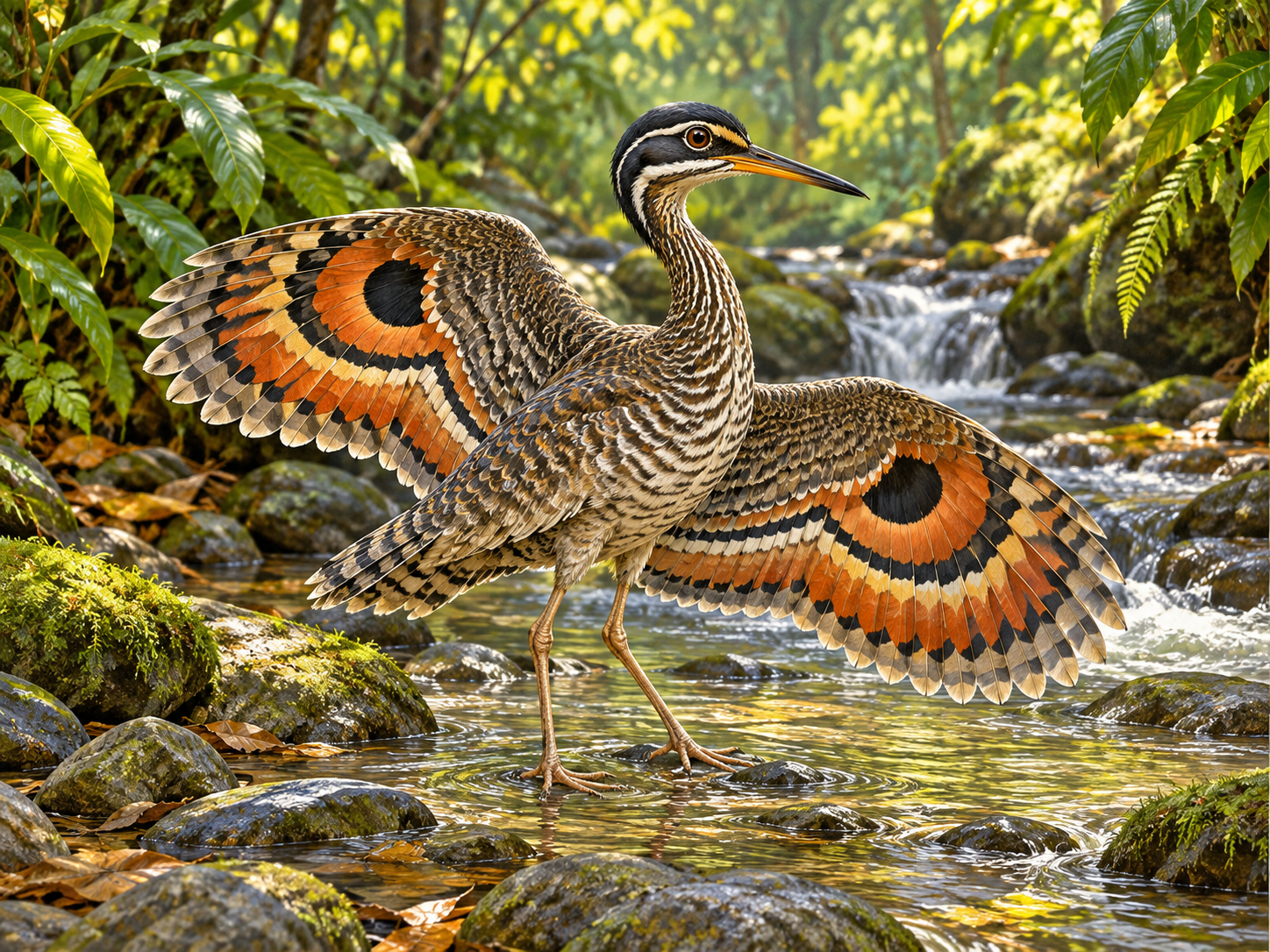
Pico: “Its folded wings look so different from its open wings!”
Tati: “We will wait for natural movement instead of startling it.”
Species overview
About the Sunbittern
The Sunbittern walks along well-wooded stream banks, using its long bill and slender neck to catch small animals. Its brown patterned plumage can blend into the riverbank when the wings are folded. White stripes on the dark head help with identification.
Open wings reveal striking orange and chestnut markings. This display can be defensive, so it should never be provoked for a photograph. Sunbitterns often occur singly or in pairs, and both parents help care for their young. Protecting streamside vegetation preserves feeding cover and breeding habitat, while keeping waterways clean supports the animals on which these birds depend.
Identification
Key Features of the Sunbittern
Dark head with white stripes.
Long bill and slender neck.
Orange-chestnut wing pattern visible in a natural display.
Habitat & range
Wooded streams in Caribbean foothills and adjoining lowlands and the southern Pacific. Usually around 100–1200 m, locally higher in Coto Brus.
Local observations
SINAC documents Sunbittern at park level in La Amistad. Confirm the appropriate stream and authorized route with a local guide.
When to observe
Plan a quiet observation with a local guide. Weather, food availability and the chosen habitat affect what you may see; a location record does not guarantee a sighting.
Conservation & care
Stay on authorized trails or viewing routes. Give birds space, keep voices low and leave nests undisturbed. Observe without bait, feeding or recorded calls.
Threats & pressures
Smithsonian identifies habitat loss as a pressure on Sunbittern populations.
Observation activity
Sketch the bird with wings folded. If it naturally opens them, add the pattern afterward; never chase or startle it to obtain a display.
Explore by location
Caribbean · Northern Plains · South Pacific · Puntarenas · Biolley